My wife gives gifts. I have to admit that I don’t really understand it and have a really hard time with doing it myself. I always feel like getting things from people is a little awkward and giving people things that they’ll actually like is so hit and miss. I’m not a wealthy person or anything, but if there was something I really wanted, I’d probably find a way to buy it. The same is true with most people in my life, so buying them something is hard. The whole gift-giving/gift receiving thing is just one of the many areas where I don’t think I quite function like my wife.
Today was a gift-giving holiday, or for me, a gift receiving holiday. It was Father’s Day. My only child is currently developing inside my wife’s belly, but still, this being the first “Father’s Day” where I could legitimately be called a “Father” meant lots of presents, because my wife gives presents. The presents were nice. She gave me all the 1980’s/1990’s era Batman movies. The super hero genre is probably my favorite genre at the moment, and probably sticks in my top five favorite genres (Alphabetically: Fantasy, Gangster, Sci-Fi, Spy and Super-Hero) any time. So, they were good choices. Probably they were better choices than the potted plant that I gave her for Mother’s Day. She also gave me a couple “Dad” t-shirts.
Me and My Dad
I seriously doubt anyone outside of my immediate family will ever see me wear those t-shirts. I wear a t-shirt every day, but under a shirt with a collar. See, my Dad always wears a shirt with a collar when he goes out in public, and to me, that is how a man should dress. I also wear a beard, like my Dad. I watch the news, like my Dad. I study the Bible, like my Dad. I fix things with JB Weld, duct tape and wire, like my Dad. I play with my dogs, like my Dad. I drive ugly used cars, like my Dad. I prefer to be alone than with people, like my Dad. I do a lot of things like my Dad. I didn’t get my Dad anything for Father’s Day. He didn’t expect anything. I’m sure that he’d have been grateful or tried to appear grateful if I had, but Dad isn’t really into gifts, just like me.
Don’t get me wrong, me and my Dad are very different. My Dad doesn’t like to go to movies. He has more of a temper than I do (but I can get there). My Dad is far more likely to wisely sit in silence if he disagrees, whereas I will always tell people why I think what I do whether they are interested or not. I like the outdoors, but Dad loves them. I really don’t mind going to a party sometimes, Dad hates them. I tend to see things from a much more hopeful perspective than my Dad does, but that’s probably diminishing.
It is really hard to tell how many of these things are nurture and how many are nature. Many of the ways in which I am like my Dad, however, are quite intentional. I want to be like my Dad. Dad is a good guy. He is a wise man. He is a smart man. He is a holy man. I really don’t tolerate criticism of anyone in my family, but least of all, my Dad. I know his imperfections. They are comparatively minor.
Feelings of Father's Day.
The recognition of Father’s Day today, and my place in it has overwhelmed me. My Dad is all of the things I described above, and I feel like I fall short. I try to be good, but I am not as good. I seek wisdom, but I am not as wise. I am recognized most places I go for my intelligence, but at the back of my mind is always; “If you think I’m smart, you should meet my Dad.” As far as pure, personal holiness goes, I can say without hyperbole that I really don’t think any saint or prophet has advantages on my Dad. I, on the other hand, am entirely too comfortable in the world most of the time. Excepting a word which many find acceptable that begins with “C” and is also used for a game fish and dice, I’ve heard my Dad cuss exactly four times in my life, and one of those was in a sermon to illustrate a point. I’m not keeping track to hold those against him, but because they were so shocking, so out of character, that they stick in my mind. Is there any chance that my child will be able to be so shocked if I do something wrong?
I don’t know. I am scared.
Every doctor’s appointment that my wife and I go to fills me with joy. To see my baby on the ultrasound is an amazing experience beyond what I can describe. To hear the heartbeat which is so fast causes my heartbeat to increase speed too. Just to look at my wife’s growing belly makes me smile. I am 37 years old and really had not expected this to happen, but it is.
All of that joy, however, is tempered with a growing sense of trepidation. How can I be good enough for a child to emulate? Sure, I worry about how I can provide financially. I worry about whether or not this is the best town to raise a kid. I worry about the outside influences the child will receive at daycare, then school, then college. I worry more about my influence. I worry about whether or not I can really be who my Dad is to me. I worry about whether or not I can be someone good enough for my child.
I read and think a lot about miracles and the power of the Spirit.
I read and think a great deal about this because I don’t really understand all
my own experiences. I know people who were deaf and now hear. I know people who
were confined to wheel chairs who now walk around. I helped to spackle an entire
house, two floors, spackled while on a mission trip with a tiny little ball of
spackle in the bottom of a bucket. I have seen money from anonymous sources
come in the mail to cover unexpected bills. I have seen enough to be pretty
sure that “the era of miracles” is not in the past. I also have another miracle
that is happening right in my home right now.
I don’t think anyone reads my blog who is not already a
facebook friend. I don’t even think that 90% of my facebook friends read my
blog. So, for the vast majority of my readers, this is not earth shattering or
groundbreaking news, but my wife and I are going to have a baby. Even though we’ve
known for a few weeks now, it is earth shattering and groundbreaking for us.
It is so amazing because it is impossible.
My wife has polycystic ovary syndrome. To explain what that
is, we can take it apart. “Poly” is a prefix meaning “many.” Cystic, means
having cysts, like boils or ruptures. So, polycystic means “many cysts.”
Ovaries are the female reproductive areas, where eggs are stored. So, she has
many cysts on her ovaries. “Syndrome” means a disease that is recurring or
permanent. In the case of polycystic ovary syndrome (or PCOS, as it is often called),
it is generally both in different ways. The cysts on the ovaries may be there
or not at any given time, but because the ovaries are involved in hormone regulation,
the syndrome is present in other ways throughout the body all the time.
The cysts can come and go. When she was 19, one of the cysts
on one of her two ovaries got so big that the ovary had to be removed. That
left her with one ovary and decreased her chances of fertility. It did not make
conception impossible, just less likely. Years went by, she met me, we ended up
getting married in June of 2008. After about a year we decided to stop doing
anything to prevent pregnancy. I knew about my wife’s reproductive
difficulties, but still figured one out of two ovaries made it a 50/50 chance
when the time was right. So, it would just be a matter of time. It turned out
to be a matter of a long time.
At first I didn't really pray for a child. That we would
have A child was just sort of an assumption that I had. After a while I started
to pray. I feel like God reveals Himself to me during prayer and speaks to me,
though never in an audible voice. He almost always tells me the same thing, “don’t
worry so much about it,” no matter what I am praying about. In small ways and large, God revealed, I felt,
like a child was coming. Still, I couldn't be sure when, where or how. As time went by, I realized (wrongly) that
whatever child we had wouldn't coming through the regular procedures (you know what
I mean, nudge, nudge, wink, wink). Check the video below if you don't.
Failing to Adopt
We did what we could afford to do to increase our chances, which
wasn’t much. We don’t have the big bucks for the really wild procedures. After
a couple of years, we sort of gave up. That just wasn’t how God was going to
give us a baby. So, we would have to get children another way. We decided toward
the end of 2011 that we would foster/adopt. It would be great. We signed up for
foster care. We moved to a house that was more in keeping with the legal
requirements. We had a home study where they made all kinds of recommendations for
our home’s safety. We followed all those recommendations, plugging our outlets,
fencing our fireplace, buying safety equipment, getting beds for the future
children, etc. We went to hours and hours of meetings and training We
subjected ourselves to intense psychological scrutiny from a firm designated to
do that.
That was where the problems began. Suddenly, after all that
work, time and expense, we were told that we couldn't be foster/adoptive parents
right now. The person who evaluated us said that we've experienced “trauma” and
that this trauma was something with which we’d not dealt sufficiently. She was
wrong, at least on my part, regarding this. Part of what we needed, they said
was therapy. You might not have to be
perfect to be a foster parent, but you’d better not have had anything ever go
on in your life.
On a side note:
I've been in therapy for almost two months now and all that my
therapist can say regarding these traumas is that if they've affected me at
all, it has been in making me a more adaptive, driven and capable person. Or
that might be how I’d be anyway. No one can really guess. Still, I never would
have thought to go to therapy if it hadn't been for the home study, and it has
been great for other reasons. Mostly, just having someone with whom you can
speak with absolute confidence regarding all the junk in life is really good.
If you have insurance, get a therapist.
Back to the point:
So, we’d tried to conceive and that didn't work. We’d tried
to adopt and that didn't work. Then we got worse news. We learned that my wife’s
last remaining ovary had a large cyst on it. While it was possible that this
cyst could someday heal, it meant that, for now, there was no chance of
conception. While we could have some hope that although it hadn't been working
so far, we might be able to conceive, this news meant that it was really,
really not going to happen.
So, when my wife started to get sick a lot earlier in the
year, the doctors would normally give a pregnancy test to a sexually active
woman her age. In her case, however, they did not. It would be impossible, they
thought, for her to be pregnant. I’ll save you the gory details, but eventually
the various symptoms included some that required a trip to a relatively new
doctor specializing in female issues. She finally gave a pregnancy test, and it
was positive.
This woman would have been the doctor for the rest of my
wife’s pregnancy, except that our insurance company wouldn't accept her because
she is too new. I wonder, however, if this is exactly why she did the right
thing. Her inexperience didn't allow her to realize that a pregnancy test would
be wasted. Every more experienced medical professional would have known not to
waste the time and money. But it wasn't a waste of time and money because my
wife is pregnant.
So, the pregnancy is a miracle.
This pregnancy is a miracle. Another miracle with which I
need to come to terms. As I said at the beginning, I've seen miracles before. I've seen them often, actually. But I've also seen something else. I've seen when
there have not been miracles. I knew this blind guy who, every single time the
Holy Spirit is active in a healing way, steps up for healing. Last time I saw
him, he was still blind. I know people who fully believe in healing and come to
church in wheel chairs. I know other couples struggling with infertility call
out to God often, and still have no pregnancy.
There are a number of popular theories on miracles. One is
that they don’t happen anymore, or maybe never happen at all. Many liberal
theologians say that God has never caused anything. They see the Bible as human
beings wrestling with concepts about God, a sourcebook for those of us doing
the same, but not a source of factual truth. Many conservative theologians
disagree with that, but take a dispensational view. They believe that miracles,
prophesy, tongues and exorcism were necessary for the raising of the church, in
what they call the “apostolic dispensation,” but that this time is over now.
I cannot agree with the liberal view because a sourcebook
without facts is pretty dang useless. I can’t agree with the conservative view
because 1) I have experienced too much and 2) because the Bible itself contradicts
dispensational philosophy (Hebrews 13, Romans 4, Romans 11, oh, forget it, the
whole Bible). If you can accept the Bible as fact, you can’t really accept
miracles as passing away unless or until everything is perfect, at which point
they will be unnecessary.
Another theory is
that miracles only occur if the person receiving the miracle has enough faith.
Just because this is really, really mean doesn't mean that it’s not true. You
only get your miracle if you really believe enough. This certainly seems to be
implied in some portions of scripture. The woman who was healed from the issue
of blood, Jesus told her, was healed because of her faith (Matthew 9:20-22,
Mark 5:25-34, Luke 8:43-48). Jesus asked the blind men if they believed he
could heal them before he healed them (Matthew 9:28). Paul saw that a man “had
faith to be healed” and healed him (Acts 14:9). Maybe if people aren't healed
they should be blamed for their lack of healing because they possess a lack of
faith. It is victimizing a person twice, but hey, that’s the way it works
sometimes.
On the other hand, we’ve got Paul’s thorn in the flesh,
which wasn’t healed despite his faith (II Cor. 12:7-10). We’ve also had
instances of people without faith being healed. The “man blind from birth” didn’t
seem to have any faith or even any clear idea of what was going on even after
he was healed (John 9). The man “at the Gate called Beautiful” wanted money,
not healing, and got healing (Acts 3:2-6). So, it’s not necessarily the faith
of the person receiving the miracle which allows the miracle to be performed.
So, there’s another group who says that it is the faith of
the one praying that heals people. Most of the Biblical miracles I can think of
where no one prayed with faith and things happened anyway are not the nice kind
of miracle. I mean, no one really prayed for Nadab and Abihu to be consumed
with fire from heaven, but they were (Leviticus 10:1-2). Elijah didn't pray for
food from ravens and it even happened during a big time lull in his faith (I
Kings 17:4). Finally, we have these people who hung around with those who would
heal others with faith, but were not healed themselves. Trophemus was
travelling and ministering with Paul, but got too sick to keep going with them (II
Timothy 4:20). Ephroditus got pretty sick for a while (Philippians 2:26-30).
They were hanging with healers, but the healers didn't heal them. So it is not
the one praying’s faith either.
I’m afraid the answer I've come to is a hard one to swallow.
It doesn't put God in a box the way others do. It doesn't confine Him and
control Him. It means that there is no sorcerer’s method that will get us
miracles. I believe that God performs miracles by grace. There is nothing we
can do. It is not a matter of having enough faith. It is not a matter of having
the right words or the right clothes. It is just a matter of requesting grace
from our loving Heavenly father and knowing that if it does not conflict with
other important matters in His plan, He may decide to do it. If He does, it will
not be because we are super Christians or more faithful or more righteous than
someone else. It will just be because He decided to do it.
The diet is on hold for at least another two weeks.
My wife had an ultrasound Friday. The baby looks great.
Friday was also the due date for a book chapter I had to
write.
My wife’s mother just died, Tuesday, and the riskiness of my
wife’s pregnancy, the distance between New Mexico where we live and Ohio where my
wife’s mom lived and have made attending the funeral unwise.
Tuesday was also WNMU’s Academic Research Symposium was also
Tuesday. This is always an amazing time. For me, the highlights were my own
student’s group projects. The work they did in service to the community is
amazing. Still, it was a lot of stress dealing the program and timeline leading
up to it.
I attended the Kiwanis “Terrific Kids” dinner Wednesday
night at which they honor the top students and a student of the year from each
of the schools in the county (I think it is county; I know it is bigger than
just in town). Many of these kids have
resumes that put the rest of us to shame.
Our landlord has agreed to switch the carpet in our room and
the baby’s room to hardwood to reduce germs and allergies. Of course, this
means moving everything out of those rooms so work can start. My wife has
mostly been working on that, but every now and then she needs something big
moved, or something taken apart or put back together.
The Tour de Gila, a pretty big annual event is in town,
causing roads to be closed and traffic to be diverted. Getting to work cannot
include normal habits of driving.
It is the end of the semester with all the insanity always
associated with that: final grades due, student panicking, final writing, etc.
I’ve been playing a lot of Star Wars Angry Birds lately.
All of this is playing in my mind as I write and COME TO TERMS WITH WHERE I AM.
Silver City, NM is an amazing place:
I love Silver City, NM. Situated right on the edge of the
Gila Wilderness and Gila National Forest, there is a beauty here that I can’t
really describe. Amazing hikes, camping, fishing and natural beauty is a 10
minute drive in some cases. There are so many birds here that you almost need a
degree in ornithology just to guess at the genus of half of them; forget about
species, subspecies or color phases. The cactus, the juniper, the live oak and
the yucca squeeze out a living on the 10 inches or less of rain which
interrupts the 300 sunny days per year.
A sign on the way into town from Deming says that we have “more
than 30 art galleries.” That, I think, is modest. The arts community is alive
and active here. The bars and coffee shops host live music and poetry readings.
Huge festivals such as “Pickamania,” a folk and bluegrass music festival and “The
Blues Festival” dot the community calendar. Bohemian hipsters and dirty dreadlocked
dreamers create for the sake of creation and live for the moment downtown.
For a town with only 10,000 people, the public transit is
amazing. A bus circles from the Walmart area, to downtown to the University
every hour. For me, it’s free as a University employee. For others it is 75₵
for a single ride. Most people who use the bus often and are not affiliated
with the University buy monthly passes, which are cheaper than this. People
complain that the bus only comes once an hour, but I’ve never seen a town this
size with that option at all.
There is a huge diversity of cultures. The ranch culture is
very active and pickup trucks and cowboy hats with healthy, very clean and
polished people calling you “sir” or “ma’am” and sometimes carrying side-arms
is common. The traditional Hispanic culture is also a powerful presence. The
radio switches back and forth between English and Spanish. The architecture reflects
the best from northern Mexico. Events such as Dia de los Muerte fill the
streets with laughter and music. Of course there is the arts culture mentioned
above. There is also a very strong biker culture. Sometimes Harleys line the
street downtown as the Buffalo Bar fills up with tattooed hoary beards. There
is also student culture. Stopping into any of the 20 some coffee shops will
display a few faces clad in purple t-shirts (the school colors are purple and
gold, but mostly purple) scrunched over books or laptops multitasking studying
with Facebook. The modest Mormons appear whenever there is something being sold
in bulk. Their values of self-sufficiency and preparedness permeate the rest of
us. Where else can you see all this diversity?
There is, of course, the college. There is never a single
day that goes by that I am not proud to be working at Western New Mexico
University. We are a college which is moving, improving and growing. Every
single area where this school has a flaw, administration and faculty are aware
of it and steps are being taken to understand and correct it. Since coming
under the leadership of Dr. Joseph Shepard in 2011, it has been clear that we
are on a mission. We are growing in numbers of students. We are growing in the
quality of programs being offered. We are growing the students themselves into
amazing, socially conscious, creative, critical and capable professionals. Yes,
there are still flaws and problems here, but it is clear every day that we are
working on them.
There is also a sense that liberty is valued here. There are
few zoning restrictions or laws regarding personal behavior. People mind their
own business and really try to stay out of each other’s private lives unless
specifically invited. If I told people around here that I store horse manure in
a closet at my house, some would ask why. Most people would wonder why I was
telling them. No one would question whether or not I should do that if I want
to. It’s my closet: my business. That’s
the type of liberty that is enshrined in the Declaration of Independence, and I’ve
found few places where it is thoroughly practiced as well as the mountains of
Southern New Mexico.
Silver City, NM is a terrible place:
On the other hand, there are some real problems here. Some
are problems of the place, others are more personal problems.
The economy sucks. My wife is at work at McDonalds right
now. To make both of our student loan payments, rent, etc. we both need
professional jobs. I have mine because of the University. She does not have one.
While unemployment is horrible nationally, and it is actually a bit better here
in the last couple months than it is nationally, there is a long term trend of
it being worse here (as I discovered using Google). The fact is that my college
educated wife should not have to work at McDonalds. She should have a nice job
in an office where she can stay off her feet while pregnant. Maybe this would
be no better anywhere else, but unemployment here is bad.
Then there’re the drugs. I’ve never had anything against
drugs, really. If an adult wants to destroy his or her body, let them. You use
cocaine; I use donuts. I mean, I’ve never thought that recreational
pharmaceuticals were a wise decision, but I always figured we all make unwise
decisions and that laws and social judgments didn’t really help the matter.
When I was in college and graduate school, many of my friends used some very
hardcore drugs recreationally, and it didn’t really seem all that much worse to
me than any other dangerous collegiate antics (iceblocking, gallon challenge, binge
drinking, dilutional hyponatremia). I’ve never lived, however, where drugs were
such a major part of everyday life. Fully half the population is somehow
involved in the production, distribution or consumption of illicit substances. Marijuana
is quite common, but the drug that seems to do the most damage is
methamphetamine. Of course this leads to all kinds of health problems and poor
decision making. Addicts engage in criminal activities in order to procure
their predilection. Probably the biggest problem with drugs is the problems
associated with any type of black market commodity. That is that those who
violate the norms of the transaction cannot be held to account for their
actions via normal legal recourse. Instead, extralegal means must be used. This
means assaults, murders, etc.
This leads to another problem here: gang activity. Out here,
in the middle of nowhere, really, there are gangs. Last January a guy from my
church was hit in a drive-by. That’s right, A GUY FROM MY CHURCH. The gang
culture is so prevalent here that it infiltrates even houses of worship and
higher education. Students who come from outside the area to attend college
find themselves embroiled in gang activity. Members of our police department
often have gang affiliations and use their legitimate positions in order to
protect their turf. This is not just rumor or conjecture. It is openly discussed.
There are ethnic Hispanic gangs. There
are biker gangs. There are racist gangs. There are more ethnically diverse
street gangs. These gangs are evident by their tags, cuts, tattoos and
violence. Then there are the rumored gangs, or the rumored gang, really. This
is certain members of the business establishment who not only maintain their
monopoly to keep wages low and profits high and engage in intimidation to keep
national chains and up and coming potential competitors.
So that leads to the fourth problem. There is “nothing to
do.” Of course, there are tons of things to do: hiking, fishing, camping,
hunting, art, festivals, dances, poetry, music. What’s lacking, however, when
people say this is really two things: shopping and movies. The concentrated
effort to keep others out has led a bit of a dull place sometimes. It has left
little for people to do on a regular weekend, so they often do drugs. There are
cute boutiques, but no regular stores. There are jewelry stores where a person
can buy a $400 pair of earrings, but no “Claire’s” for instance. There are
galleries where a person can get a $5000 painting, but nowhere, really, to get
a poster. You can eat in fast food or upscale local restaurants, but there’s
nothing comparable to, say, an Applebees or Red Lobster. Finally, the closest movie theater is an hour
away in a much smaller town without a local mafia controlling it, called
Deming.
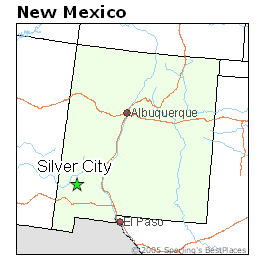
Beyond Deming, another hour is Las Cruces. It’s twice that distance
to El Paso, which has the closest national airport. That is the level of
isolation. To fly home for a funeral (as we’ve found out this week) is an
undertaking that reaches the level of being basically impossible. Furthermore, there
are no means of getting out there except driving yourself. I’ve live as far
from a major airport before, but there have always been shuttles that will take
you from the small towns to the big cities: not here. There have been attempts,
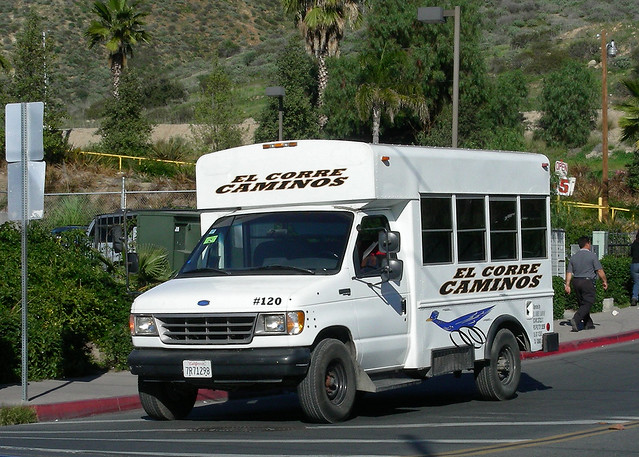
but somehow, they’ve been thwarted. There is great public transportation in
town for a town this size, but no way out if you need to go.
And that matters to us because we are so far physically from
family. Jamie’s family is 1,800 miles away in Ohio. My family is about half
that far in Nebraska. We can’t just hop a bus or a train or a plane to get out
there. We just can’t go. It is enough to drive a person mad (by which I mean
BOTH crazy and Angry).
So, I’m frustrated right now.
My wife is more frustrated for obvious reasons. She is also
sad, angry and hurt. I wish there was something I could do to dull the pain,
but there’s not. Way out here in the Southern Rockies, we’re too far out to do
anything but cry.
Probably my favorite time of day is my
afternoon walk with “the girls” as my wife and I call our two
dogs, a black chihuahua named Bridget, 4 years old and a red English
Cocker Spaniel named Katniss, almost a year old. I am not generally
home from work very long before we go out.
It begins by me saying “Bridget,
would you like to go for a walk?” Bridget's answers are nonverbal but
nonetheless clear and always in the affirmative. I put Bridget on one
end of two leashes I have tied together and go out to get Katniss.
Katniss lives outside because, for her,
life is just too fun to be contained. So, indoor life would be like
putting lightening in a box. She always greets me at the back gate
with a toy. I often throw it for her a few times before she climbs up
on the fence to accept her leash and training collar. I then pull her
up from the fence and bury my face in her sun-warmed fur. She nuzzels
back for a few seconds and then wiggles out for the walk.
For the first ten feet of the walk, the
training collar is completely necessary. Katniss is so enthused to be
out that she often jumps in circles and would run everywhere if
allowed. Bridget looks with disdain at these antics and will
sometimes even nip at Katniss to tell her that we need to WALK, not
dance.
Then we walk from our street, down the
main street to another side street to a dry creek bed. All along the
way we are greeted by the barking of hundreds (well, at least lots)
of other dogs all jealous of us and our happy romp. When we get to
the creek bed, the real fun starts. We walk up the creek bed about 20
feet and then the leashes come off. The dogs run. I walk.
Technically, the creek is in town and
the leashlessness is quite illegal, but we are not concerned. If we
were to ask a surveyor, the creek is in people's backyards and
“private property.” Still, if property is, as the economic
theorists I respect believe, the application of labor to nature's
bounty, this place is far from property. Here, nature allows no labor
to have lasting effects. The flash floods that occur when it rains a
few times a year would rip away any attempt at fencing or building.
Here, the cottonwood, the Russian olive, the live oak, the juniper
and (unfortunately) the Siberian elm grow unencumbered by any
attempts by humans to tame them. Here one can find deer, javalina, raccoon, skunks and if the tales are true, mountain lions. This is a
space right here in town which cannot be tamed, so it isn't. Instead
people wander and hike on it like it is “public property” if such
a thing can exist and we can all feel very free.
I walk along the path and watch the
dogs dart among the trees and bushes. The place is alive with birds
365 days a year, and 366 on leap year. According to the philosophy by
which Katniss lives, we should all do what we can. Birds can fly. So,
they should. She is eager to follow her natural instinct and put
every dove, quail, raven, starling and sparrow into the air with all
the enthusiasm of a dog bread for 400 years for flushing. Bridget is
also hunting. Often Bridget will find trash. Other times she will
find a delicious lizard. Both dogs find the bones of deer who met
their fate in the little ravine
As we walk up the creek we enter into a
space that one would never think one was in town. The trees block any
view of buildings and the wind in their branches washes out the
noises of traffic. This time of year, the air is filled with a
million pieces of cottonwood cotton almost reaching the ground before
being whirled back up to the sky. I like to find a place to sit in
this area. I watch my dogs, the birds and an occasional mule deer.
Today I watched a gopher snake all curled up on a rock in the shade
that had been a rock in the sun and was now probably perfect for
maintaining his temperature. He watched me. I watched him. I don't
like snakes and he didn't seem particularly fond of me either. Still,
we put our archetypal differences aside and warily followed a policy
of non-interference. I was somewhat concerned that he might attempt
vengeance on the chihuahua for her reptilian pallet, but they never
noticed each other.
I love it here. If I did not believe in
God, in this place I would have to believe in many gods: gods of
cottonwood and yucca and rocks and gopher snakes. But I only believe
in one God and He's enough for all of this and more besides.
Sometimes I sing. Sometimes I laugh. Sometimes I sit. Sometimes I
wander over to see what the dogs are sniffing. Eventually, I walk on
up the bank and around the corner.
Our walk makes a huge circle and when
we come out, and the leashes come back on, we head over to the soccer
field. If there are no games or practices, the leashes come off
briefly again. If there are children playing, we walk around them.
That brings us to the other end of the main road, which brings us
back to our road which brings us home. And I put Katniss back in the
back yard and let Bridget in the front, and face the chores of supper
and dishes and the stresses of living a modern life. Sometimes,
however, I look out the back door at Katniss playing with shadows of
birds and briefly consider that I may just decide to step out back
and live with her.
I don’t like to go to healthcare providers of any kind. My
biggest concern, when I go in to the doctor for a simple checkup or to get a
prescription for a known difficulty, is that they will tell me that I am sick.
I worry that, feeling relatively healthy, or feeling a bit of sniffles, the
doctor will say something like “you have two months to live” or “you have heart
disease” or worst of all “no more chocolate for you.” I guess I’d prefer to be
blissfully unaware of any medical difficulties I have. Of course, I always feel
better leaving the doctor’s office having NOT heard these things. I feel like a
weight has lifted. I guess some part of my mind always thinks that I am
probably about to die, and I’d really rather not know.
I suppose it that a similar fear kept me out of a therapist’s
office for years. I’d always had this sneaking suspicion that I was nuts. Certainly
I didn’t feel nuts, but what greater evidence could one have? Honestly, I had
other evidence as well. I’d had a home study when I’d hoped to adopt and the
social worker had not approved us because I had experienced trauma that she
felt I had not dealt with. My wife likes to read books about various
psychological difficulties and has pointed out on a number of instances
situations where I meet some of the criteria for some mental disorder or
something. And, once in a while, I do something or think something that in
retrospect I can see as crazy.
It was one of these instances that finally got me into a
therapists’ office. I had an outburst of anger back in March that was so
powerful that it scared me. I decided, I might really be crazy. I got so angry during
a situation that I completely lost my cool. I decided I’d better go in. I fully
expected that I would go in to the appointment and be sent away in a white coat
to an institution where they would feed me powerful sedatives and hook me up to
machines that would keep me in a state of constant electroshock. I figured I’d be told that I am a danger to
myself and others and that I should probably be locked up, permanently. I
figured they’d at the very least tell me that I couldn’t have guns anymore, which
made me sad, because I like guns. They make loud noises and gunpowder is one of
my top five favorite smells.
Well, just like every single time I’ve ever been to a
doctor, nothing terrible like that happened. In fact, there’s nothing wrong
with me. I am not crazy at all. I do not have any type of mental disorder
whatsoever, not even a mild one. The trauma the social worker believed I’d not
dealt with is something that is there, and it does affect me, but it is not
debilitating. I am sane: perfectly and entirely without mental defect.
And going to therapy for the last month has been really
wonderful for me. I understand so much better what is going on in different
aspects of my life. I recognize that my stress levels come from one specific
source, the fact that I have never really learned to set boundaries. I have
never really learned to say “no” when people ask me to do things. The reason is
that I always do legitimately WANT to do everything people ask me to.
Unfortunately, I can’t. I have limits. So, I am learning. I am learning that
except in extreme circumstances, no one actually has the right to make any
demands on me. People can make requests, and I can look at my priorities and I
can say “no.”
This is really is hard because people get upset when others
tell them “no.” The first response most people feel when told “no” is anger. I
need to learn that just because someone is angry does not mean I should give in
to them. When I’ve reached a point where I’ve done all I feel I can do, I need
to say “no.” At this point this is still really hard for me because I hate
having people mad at me. So, that is the next step. Learning to live with other
people’s disappointment, and even my own, that I can’t do everything that’s
asked of me.
Part of how I see myself is as a cosmopolitan American. By this I mean I’ve lived in America my whole life, but not any single part of America. I was born in western Nebraska, but my parents moved to Alaska soon after. We lived in a couple towns in Alaska before settling down for quite a few years in eastern Wyoming. After that we moved to western Nebraska again, then to central Nebraska. When my parents moved on, I stayed in central Nebraska before I moved to Ohio. From Ohio I moved to Virginia, then to Kansas. From Kansas I moved to Missouri. Then I was back in western Nebraska, but in a town I’d never lived in before.After that, I moved to where I live in southern New Mexico.
I see my roots as American. I love my country. Still, the roots are to ideals of frontier ingenuity, independent Christian faith, loyalty to family, hard work, liberty, which I see as loving others but letting them make their own mistakes, and freedom, which I see as the right of self determination. You know, America. Quite possibly all this applies to other countries too, but I think of them as America. Oh, sure I like the amber waves of grain and purple mountains majesty. I’ve seen the east coast, the west coast, the Gulf Coast and the Gulf of Alaska coast. Wherever I live, I see it as temporary. I see it as a place that I love and enjoy but from which I will move on when the time comes.
In general, when I move, I just move. I leave. I don’t miss a place. Since facebook, I’ve been able to have some sort of relationship with people I once lived near, but for the most part, I don’t really talk to people very much once I’ve moved away from them. It’s over. I don’t know if this is a coping skill I’ve learned because I moved so much or if it is part of who I am and has allowed me to move around so comfortably. I’ve liked them all, but my roots are not more ideological than geographic.
At least that’s the way I see myself. My parents, despite moving around quite a bit, have always seen themselves as being western Nebraskans. More than that, they see themselves as being from the North Platte Valley in the Scottsbluff region of the panhandle. My parents lived there growing up, their parents lived there their whole lives and I lived there for the end of junior high and the beginning of high school. We lived in a house built by my great grandfather and that we rented from my grandmother. While we were there, my parents saw themselves as “home.” I’ve always seen it as being another place where I lived one time.
This past summer, my parents moved back there. They moved back to the very same family house, and right now, I am there visiting them. It is weird. This house is owned by family, so I’ve been back a few times. It’s always been weird, but actually staying there is weirder. The house is different than it was when we lived here. First of all it is surrounded by a thick wind break: a necessity for this region where the wind can regularly gust into the 40mph range on a still day. On windy days, like yesterday, it just stays there. It was really nice to have it yesterday. My dad and I planted it in 1988 and I had to haul 5 gallon buckets of water out to those trees every day. I hated it.
Those trees, the trees I helped plant and water, are the strongest markers of the weirdness of this place. Generally, I do things, but I guess because I am always moving on I rarely see the consequences of my actions, rarely see the reaping of what I sow.
My Dad and I took his car into a mechanic. The mechanic had been one of the kids in the youth group when dad was a young minister. The mechanic came out and told me about how my dad had led him to Christ in the early 1970’s. He told me about how he had been able to grow in the faith himself, and how he witnesses to others through his business.It was like the trees. I know my Dad has been ministering for a long time, but it is only the immediate consequences of his work that I see and that I know.
I am who I have become and I don’t think that I could ever really become a person with geographic roots. I suppose this place where my family is from is as close as I’ll ever have.I am content with finding these. I am content with seeing these trees. I am content to come back and see these people. It’s enough. An old man in a green pickup truck drove in while I was walking my dogs yesterday and said “you must be a cousin.” I guess I must be. I guess this must be “home.”
In the spring of 2009 I was teaching at a small, private liberal arts school in northeast Missouri. I had only been married a few months and our car was dying. So, we bought a "new" one. A guy in the church we attended at the time had a green 1997 Chevy Cavalier that he was willing to let go for $800. We pounced on that. It has been a great car for so many reasons.
It was our first car "together." Our names appeared jointly on the title and registration for the first time ever. We test-drove it together. We decided on it together. My wife and I have probably spent as many hours together in that car than we've spent in some of our homes.
It wasn't long after we bought that car that life began to change for us. We got a letter saying that the college at which I was teaching no longer wanted me to teach there. I wasn't concerned. I believed I could always find another job teaching college. We drove our little car up to Ohio for my wife's brother's graduation then drove back to Missouri without any concern. As the months went by, our lease expired on the house where we were staying and we decided to move in with my parents for a little while while I looked for a teaching gig. The drive up to Nebraska ended up being our home for a year while I worked jobs which paid a low hourly wage looking for a teaching gig.
When I finally got one, it was in New Mexico, where we live now. The move from Nebraska to New Mexico was the first time that the car showed signs of wear. A few hundred dollars worth of repairs seemed like a lot then, but we were doing fine. There were some problems after that. There was a persistent smell of gasoline. The coolant seemed to disappear. Oil must have been slowly leaking or burning because it went pretty fast. Still, we drove it for a few more years and drove it a lot. In Nebraska, we believe that we drive long distances for things. That is because we're comparing ourselves to points east. In New Mexico, it is nothing to drive three hours to see a movie or go shopping. We've even driven a couple of hours to go to Mexico just for dinner and to pick up some cheap vanilla sometimes. The closest truly functional airport is in El Paso, four hours from here.
In October, however, the steering fluid started leaking, big time. The mechanic said that this was due to a rack and pinion which was coming apart. He also told us that the smell of gasoline was from an O ring deep in the engine and that it really needed to be fixed for our car to be "safe." He explained that in order to make the car "safe" it was going to cost thousands. Those were thousands we don't have.
So, we started looking for a "new" car. I must put "new" in quotation marks because our finances would not allow us to buy a truly new car, and even if they could I have a moral compunction about buying anything "new" that depreciates as quickly as a car does. It seems more than a little ostentatious. Our search was not going well. The year of low paying jobs and problems with student loans affected our credit. Anything I was seeing in our range on craigslist was in worse shape than the green Cavalier. I was getting discouraged, angry and upset.
Finally, a guy from our church who runs a scrapyard told us that he could put together a car for us pretty cheap. For around $2000 he could put together a 1992 Toyota Camry from parts he had in his junk yard. He assured us that this would be a really good car and last us quite a while. We gave him the go ahead. Well, it turned out that in 1992 Toyota changed engines mid-year. So, the parts he had didn't necessarily fit the car. October turned into November and we hoped to have the car by Thanksgiving. He was having trouble finding the right engine. We needed a car to get home for Christmas, but he didn't have it done yet (and my wife couldn't get the time off). December came and went. We kept driving the Cavalier and it kept getting worse.
Last week when the temperatures dropped below zero, it developed a visible coolant leak. Up until this time, the coolant was going somewhere, but we couldn't see it. Now it dripped out whenever the car ran and was going through more than a half-gallon of the stuff in the short drive to work. Not only is this not environmentally sustainable, economically it is pretty bad too. Then, Friday night, a tire went flat. We put on a doughnut and went home. We'd been hearing for weeks that the Camry would be done any day now, and were arguing over whether to try and find a used tire for the Cavalier when we got the call that the Camry was done.
We drove the Cavalier up to the junk yard on a doughnut tire, pouring out coolant, leaking steering fluid, smelling of leaked gasoline and overheating. That doesn't even take into account the physical damage, multiple dents and dings and chips and scrapes and missing mirror and taillights that had more translucent red tape than glass. There sat our "new" silver Camry. He showed us how he'd put the Toyota body over a Lexus ES350 engine and transmission of the same year. He showed us that everything fit together and worked just fine and he assured us that this should be a good car for a few more years.
Today I realized that a weight was no longer on my chest. I worried constantly while driving that Cavalier around the past few months. Still, there is something bitter sweet about the whole thing. That little green car has been with us through some of the most difficult times in our lives. It has been stable through multiple transitions. It has been something we've counted on and it didn't let us down. I know that I am anthropomorphising, but I almost feel like it knew it was on its last legs and had to just keep going to take care of us. I feel like when one puts an old dog down.
I know in some part of my being that cars don't have feelings. I know that sentimentality attached to objects is messed up. Things break down. Things don't have souls. Things are just here for us to use and enjoy. Still, that car seemed like part of our family and as much as I like the new one, and as much as I'll probably look at this blog some day and laugh at myself, I can't help but feel a little sense of loss.
I am in my favorite room in the house. We generally call it our "den." It has walls lined with books, a desk for the computer, some filing cabinets, our television with PS3, a comfy couch, a recliner and a wood-burning stove which currently houses a cheery crackling fire. Right now, the the television and PS3 are occupied playing a series of about 100 Christmas carols that I have on MP3. The dogs are playing somewhat too rowdy game for the house, but outside a mix of rain and snow makes me want to keep them in despite the rambunctious antics.
Earlier this evening, my wife and I attended our church's Christmas Eve service. We sang some lovely carols and took the Lord's Supper along with our church family. When I got home, I made some snickerdoodle cookies with alternating green and red sugar. I may take them with me to a gathering planned for tomorrow. I am also bringing a cheesecake that I made in the shape of a Christmas tree and a chocolate pie. Others will bring assorted good things to eat and we will have a wonderful time.
If my Christmas Eve sounds positively idyllic, that's because it probably is. The fire is warm. The carols are great. There are so many presents beneath the tree that it can barely contain them. If Dickens were to have written in modern times, I imagine he would have described a setting not unlike the room I am in. If this picturesque image of holiday perfection makes my readers wonder why I would describe this as my worst Christmas Eve of my life, well, that's kind of the point.
This year's disappointments.
Nearly every year of my life I have traveled for Christmas. There was a brief period during my teens when my parents lived close enough to their parents that major travel was unnecessary, but otherwise, Christmas has meant piling into a car and travelling a long distance. This is normal, I believe. At least it is common enough for Perry Como to have made a song famous regarding it:
I expected this year to be no different. My wife has a job which is none to wonderful for a number of reasons, but one advantage about which we were excited was the fact that she was to have two weeks off over Christmas. Since October, however, the company for which she works has undergone some changes. Among these changes was that there would be less holiday time available. At first, we thought we might have at least one week of Christmas break off. Then we heard that we did not. Our plans to travel to see family for Christmas were squashed.
As if that wasn't enough, promising two weeks and giving none, she had to spend tonight at work. Christmas Eve she must spend the entire night at work. So, while I am enjoying the carols, the dogs' antics and the cheery fire, I am doing so alone (except for the dogs).
I've never spent a Christmas Eve alone before. Normally, I like to be alone. Generally, I look forward to the evenings when my wife must work her overnight. I am a solitary person by nature and interaction, even with people I really love, wear on me. I am not particularly social. Don't get me wrong. I love certain social gatherings, but I enjoy the energy I get from being alone. Generally, I find the opportunity to be alone exciting.
But not on Christmas Eve. Being alone on Christmas Eve stinks. It is probably worse for my wife who not only is not able to be with people she loves, but actually has to work all night.
But complaining is wrong . . .
I can get so caught up in the negative. I am alone on Christmas Eve, but my Christmas is much better than Christmas is for the Christians who celebrate in Sudan, Iran or China. It is, in fact, beautiful, comfortable and amazing. My wife will come home in the morning. We will open our presents. We will play with our dogs. We will have a good time. I often get so caught up in what I do not have that I forget all I have.
Our pastor said something interesting Sunday. It was not a major point of his sermon. In fact, I am pretty sure it was an unintentional short digression. He pointed out that for Christians, Christmas should not be about "giving," it should be about "receiving." Christmas is not about family. It's not about friends. It's not about food. It's not about giving gifts, it's about receiving them. The incarnation, the ultimate gift from God, is for us to receive. It opened the door for us to receive the gifts of salvation, the gifts of the Spirit, the gift of a personal relationship with The Most High God. For me, it is harder to be a grateful receiver than a generous giver. As a receiver, I lack gratitude and always seem to be demanding more.
That's what I've been doing lately. I've been complaining to God, friends, family, everyone about the changes in plan I've had to endure. I haven't focused on all I am receiving. I haven't seen God's grace in the wonderful Christmas I can and will have. Because of that, I have almost ruined it for myself.
So, I am going to change.
I am going to focus on the good. I am going to be a grateful receiver of gifts. I am going to be thankful for what is here. Really, that should be easy. I have been given a great deal and it is wonderful.
I sometimes have the privilege to teach Interpersonal Communication. It’s not my area of expertise, not the way Public Speaking, New Media, Rhetorical Philosophy or Spiritual Communication are. In fact, it’s not even something at which I am particularly skilled. I wouldn’t quite say that I am misanthropic. I am quite comfortable working with groups and crowds. In fact, while I am entirely introverted, if you give me an audience, I tend to ham it up. Still, I struggle with the basic interplay between two people at an emotional level. My best friendships in my life have always been primarily cerebral, spiritual and only consequentially emotional. I have better emotional communication with dogs than with human beings (but they rarely challenge me intellectually ((but I have this red dog right now who I think is smarter than me))). Part of the reason I love teaching it, however, is how much I learn from the class myself.
Right now I am preparing to teach the class in the spring. This will be different from when I’ve taught it before. First of all, it is to be taught at the junior level. Other times I’ve taught it as a sophomore or even freshman class. Secondly, technology has made great strides since last time I taught this. Moving my thinking from a bulleted Power Point epistemology to one that is more informed by thought mapping, like Prezi, has been instructive.
Finally, I’ve never taught the class as a married man. Don’t ever let anyone tell you that marriage is good for your self esteem! I came to marriage as an expert on communication, but marriage has made me question everything again. Everything that seems rock solid becomes ephemeral when you are one in spirit with someone whose reactions to life’s events are totally foreign. It makes a person question all that he or she knows. I question my faith. I question my intelligence. I question my masculinity. I question my traditions. I question my values. And most of all, I question my competence.
Somehow, before this class begins in January, I need to find a way to either find a solid intellectual place on which to stand, or to find some way to teach credibly from a place of intellectual insecurity. So, this might end up being a series of blogs. Of course, I’ve predicted that before and been wrong. My next post might well be about how awesome ice-cream is (answer=very).
Guidelines for expressing emotions.
After four years of marriage, my wife and I have learned to push each other’s buttons and get the other one really upset. You might wonder why we would want to do that. So do I. The fact is that if you question us outside the situation, “would you say or do this or that thing?” We’d probably say “no, I know that would upset” the other one. Still, in that situation, we do or say things that we know will affect the other one. We also know what things affect us, but let ourselves get worked up over it anyway.
As I look at the text I plan to use next semester, it seems like this should be easy to overcome. The authors give some excellent guidelines for expressing emotions. They are guidelines I recognize intellectually. Each of them is backed by solid empirical research and tried and true philosophy. In the text, each of these guidelines is explained thoroughly and fully documented; it’s a good text. Here, I’ll just give you the bullet points (literally), but if you want to read it thoroughly, use the link above to check it out through your local library (interlibrary loan is great) or buy it, if you’re rich. The relevant pages are 132-141.
Recognize your feelings
Recognize the difference between feeling, talking and acting.
Expand your emotional vocabulary
Share multiple feelings
Accept responsibility for your feelings
Be mindful of the communication channel
Sweet. Good advice. I’m gonna do that. Except, it’s not all that easy.
Accept responsibility for your feelings.
Everything on that list is harder than it sounds, but the part that’s floating around right now is “accepting responsibility for your feelings.” When I was in college (undergrad) I learned to do this. I remember well sitting in Dr. Maurine Eckloff’s General Semantics class and learning how to redefine and use layers of abstraction to choose which feelings we would have as a result of things happening. I came to understand that no one could make me angry, sad, happy, etc. (Dr. Eckloff would love that “etc.”). Instead I recognized that I could choose which emotion was appropriate and useful to the particular situation and apply it, almost like a tool. That I choose my emotions was a truth that set me free. It was amazing. I was no longer controlled by my emotions. Since then, I’ve used those same tools both in classes and individual conferences to help other people get set free. I’d say I’ve gotten more thank you notes from students for help with that than anything else, but that would imply I’ve gotten thank you notes from students for something else. No one can make you feel anything!
Except . . .
My wife makes me happy. My wife makes me sad. My wife makes me angry. And I do the same to her. And we can do so with almost scientific predictability. When I am in that moment, and the emotion seems to hit me, I really don’t seem to have a choice. The feeling comes up. I fight it, but it’s there. Now, the pleasant feelings are no trouble. Let them come. Still, I need to find a way to get passed the angry feelings. It does help a little to recognize my “buttons,” but even though I know that these feelings are likely, right now it seems hard to take responsibility for them.
My angry buttons
When someone swears at me. I experimented with profanity in my youth, but have come to dislike it. I can give all kinds of theological, theoretical and philosophical reasons why it is bad. When it is directed at me, it is very hard for me to not get angry. To me, these words need to be limited to times when actual hatred needs to be expressed. When I hear them, I feel hatred directed at me. Then I get mad.
When someone implies I should do more. I work more than a full-time job, teaching an overload every semester and summers, on the most time consuming committees, with a complete research agenda and service commitments. Even my “relaxing” time watching TV or reading sees my phone in my hand, answering emails from colleagues and students until late in the evening. I do this because my paycheck pays ¾ of our bills and I have to be on the ball. Still, I don’t let work interfere with household chores. I do all the cooking for our family meals. I do all the grunt work for pet care. I do my own laundry. I take care of the dishes (usually). I make the bed (which I never did when I was single). I mow the lawn. I do the grocery shopping. I plan the menus. I drop into bed exhausted at night. I don’t mind. I like work. But I am really and truly doing all that I can. I don’t mind being reminded that the litter box needs cleaned or that there are dirty dishes in the sink. I forget stagnant details sometimes (scientifically, men don’t notice these things as a symptom of nature, not nurture or desire). When there is an implication that I am not going the extra mile or doing my part, however, I get mad.
When my family is criticized. This is a line no one can cross. There are families where they can attack each other, but won’t let an outsider attack. Not in mine. My mom CANNOT criticize my wife. My wife CANNOT criticize my mom. Both of them have tried and both of them have head from me about it. Everyone, clear out to cousins, are off limits. You can be honest; my mom doesn’t prioritize house cleaning; my brother doesn’t recognize his limitations; my wife doesn’t apply the same standards to herself as others but NEVER imply that these are bad things. My mom prioritizes people. My brother exceeds expectations. My wife crusades for justice beyond what it is possible to achieve. If someone criticizes them, I get mad.
When I am pushed away or dismissed. This is probably the hottest of the hot buttons. You don’t have to agree with me. You don’t have to think I’m right. You can be angry with me. All that is fine, so long as you look me in the eye and stay with me. When someone doesn’t do this, they are saying nonverbally “you are nothing” or “you don’t even exist to me.” When this happens, I get mad.
But nothing can make me mad.
It is really hard when I look at these buttons to agree with the research. If you don’t live with someone all the time, it is easy to deny those buttons exist. When they are with you, however, and push your buttons regularly, it is every difficult to say that they didn’t “make” you angry. It is difficult to say that I choose to be angry in these situations. Maybe that difficulty is the whole point though. Maybe if I can get to the point where I can really take responsibility and say “I can choose to be angry” I can develop. I have to say though, that where I am now, it doesn’t “feel” like a choice.
I love the fruitcake, the eggnog, the gingerbread, the multiple dinners at every organization of which I'm a part and right now, I am not going to worry about the diet.
I love the trees, the tinsel, the holly the mistletoe and the brightly wrapped gifts, and no, I do not think I am worshiping Odin if I kiss my wife beneath those poisoned berries.
I love the cheesy specials on TV and the campy songs in every store and I am well aware that they are cheesy and campy but they are wonderful.
I love that it lasts from Halloween to New Years and that Thanksgiving gets caught up in it because you'd have to have the worst kind of obsessive compulsive disorder to want “one holiday at a time.”
I like shopping for gifts for friends, family, the less fortunate and the most fortunate.
I love Santa Clause and can prove that he's real and that while he may not be the “reason for the season” he is part of the celebration.
I love the giving and receiving, and don't worry if it is too “materialistic.”
I love candle-light church services, where the wax burns the hand and I am not concerned about the fire danger.
I love pine needles on the floor and the cat in the tree and yes, it is a mess, and no, I don't care.
I love dashing through the snow, driving across the country during the worst weather of the year, the one time of year when it is the most foolish to travel and if I die on the road, I die with a carol in my heart.
I love the baby in the manger and don't care that we don't know, historically, when his birthday might have been.
I like little girls dressed up as angels and don't care that all the angels mentioned in the Bible are masculine.
I love the shepherds and the wisemen and I don't care if they weren't there on the same day, and the wise men came later, once Mary and Joseph had found a house; they're all in the barn with the little drummer boy for me and Mary is HAPPY to have some kid banging on a drum in front of her newborn.
I love Christmas and I celebrate extravagantly because the Nativity is something worth celebrating extravagantly and if you don't like it, I'll take your share, and you can go lock yourself up in your house and develop seasonal affective disorder, but don't try to foist your negativity on those of us who are having fun.
I can't believe I haven't posted since August. This has been a very busy semester, but still. . .
And now it is almost Halloween. Halloween is a great time for me. Growing up, Mom would start playing Christmas music the day after Halloween. Probably for that reason, to me, Halloween is the beginning of the holiday season. It is non-stop party from here on out:
October 31, Halloween November 17-20, The National Communication Association Convention November 24, Thanksgiving
November 28, My wife's birthday December 5-8, Final Exam Week December 10, My birthday December 25 Christmas December 31, New Years Eve!
Coming to terms with debt, frugality, hope and junker cars.
My wife and I have degrees, and the debt that comes with them. Actually, we have more significantly more debt than people do who get out of college, but I have a PhD and she had significant family issues in college both of which caused a pretty severe accumulation. If we pay on them like we are supposed to, I will still be making student loan payments with my retirement checks. We don't want to live that way however.
Lately, while the federal government has been making plans to raise their debt ceiling, my wife and I have been actively working to reduce ours. We have quickly moved out of consumer debt and now only have those student loans on which we can make payments above and beyond the official plan.
Living within one's means when one's means are massively reduced by student loan debt is not easy. We have made sacrifices. We have missed out on things. Our lives are struggles, but we are not just struggling to make ends meet. We are struggling to see those ends disappear. I have taken extra assignments and teach extra classes at work. We live in a tiny apartment. We drive junker cars. We are going to do this.
Still, we have to live. We need groceries, electricity, transportation to and from work and fun. We need these things even while we are living in a tight way. So we have to make these things cheap. We've generally tried to live with just one car between us. It is an old car, bought with cash, and requiring no payments. Still, it really isn't enough. Most days we can mash sharing the car with bus schedules (the bus stop is only a mile away) and make it work. Sometimes this is really, really difficult.
Furthermore, our cheap, old car is really not the best for getting some of the cheapest fun around. We live in a town on the edge of the beautiful Gila National Forest and the Chihuahua Desert. Hiking, camping and nature are obvious and free-to-cheap fun. Our little car, however, doesn't do well on Forest Service roads.
So I needed something with better clearance and that I could drive maybe once or twice a week to work. The problem was that it would have to be a second car purchased while living on our tight budget. I found one. I bought a car this morning for only $250. It meets all our needs.
To me, finding any functional automobile at all that fit in our budget was a miracle. You might say: "That hunk of junk! How is that a miracle?" We can afford it. It can get me to work a couple days a week and will be a great fishing, camping and hiking car. It's perfect. It's a miracle. It gives me hope.
Furthermore, I really think that junker cars are usually a better deal. I always drove junkers growing up. My dad always drove junkers. One day, when I was 19 and knew everything, I decided I was tired of buying junker cars. So, I went into debt to buy a "reliable" car. It was an Oldsmobile Cutlass Sierra. I bought it for $3000. According to an online inflation calculator, that would be 4355.56 in today's money. I ended up spending more on repairs every month than I did on payments and to make both I took out that first student loan.
Junker cars save alot. According to an article originally posted in Kipplinger's Personal Finance, the average American spends about $479 per month on a car loan. To me that means that if you buy a $500 car about every two months, you're money ahead. The truth is, that no car I've ever bought for this amount has lasted fewer than three years. See how much I haven't spent?
Now, don't misunderstand me. If I thought I was going to have to live this way forever, I'd be borderline suicidal. I don't believe that. I think that finding a car for $250 is a miracle. I think that miracles happen like this all the time if a person is managing his or her finances correctly. I believe that more miracles are coming and that we will be able to get out of debt much sooner than our creditors think and that when we do, we will be able to buy very nice cars, with cash, and no car payment.
Coming to terms with Budgets, Math and being a nerd.
The story.
I recently posted on my status on Facebook:
So, in case there was any doubt as to whether or not I'm a nerd, I'm really excited about our fiscal month budget for July 15-August 15."
My brother responded with "porque" and the answer became something much longer than should really be on a Facebook status. So, it is now a blog.
Reason #1: it's Math and I Can Do It.
There is probably just something about my nerd nature that makes me love budgets. I've always been a nerd, more comfortable with my imaginary friends than with real ones, but I couldn't always accept it. First of all, I really wanted to be cool. Secondly, I wasn't really good in math in grade school and high school. How could I be a nerd if I didn't like math?
I didn't like math because I wasn't good at it. I wasn't good at it because I had trouble keeping things in neat rows. That meant that it was hard. My teachers were always frustrated because they could tell I understood the concepts, I just got the answers wrong. Not being good at math continued into college. It wasn't until I was in graduate school and had to take statistics that I learned my way out: spreadsheets. Spreadsheets keep everything in nice neat rows anyway. Furthermore, when you use spreadsheets, the concepts and the data are all you need. They make it neat for you. So, I like it. I feel like I can do math because I can make the computer do math. It is like a blind man suddenly seeing.
I like it when all the numbers add up and it all just works. Really, since I use a zero-sum budget, ultimately, I am excited that 1-1=0. I have no money at the end of each fiscal month, exactly as it should be. I enjoy watching it all come together as I enter the data. Each bill paid with money that hasn't come in yet feels like a foe vanquished. I enjoy a filled out zero-sum budget because it lets me imagine a future and causes that future to come into being.
Since this blog is primarily a response to my brother's question, and since we are both table-top role players, I think he will understand this: It is like filling out a character sheet for a role playing game. You put in your abilities, their modifiers, relate them to weapons and can imagine how such acts will work out in "real life." It is the same with budgets.
Reason #2: we're winning and we know it.
My wife and I fell off budgeting when we were between academic jobs and having enough money to buy groceries was all we could hope to accomplish. Since we have come into a better position, we went back to the zero-sum budget. Every month as we work out our budget, we can see real progress. We use goals advocated in Dave Ramsey's Seven Baby Steps to gauge our progress. It seems like every month we move closer to our goals. As we do so, life becomes easier.
In the next fiscal month, we will be completely free from consumer debt and we have already been able to vastly increase our payments on student loan debt as a result. We've also been able to start saving seriously for a second car, a trip home for Christmas and other necessities. All of this will be happening while simultaneously increasing our individual discretionary spending: that means money we can play with. That is something that can really excite a person. It isn't just that we are paying our bills and can feel okay, the budget puts it all there in black and white. We are improving our lives. I didn't get a raise, I just have more money all the time because when I get money I know how it will be used.
Reason #3: Because I am a nerd.
I like budgets because I like budget-type things. I set goals for each week and each work day and put them in little charts and cross them out when they are done. Each week on Wednesday I draw up a menu for the entire week, go through the cupboards to see what I don't have to cover that menu. Then I make a shopping list in which I buy everything I need to make everything I need that week. The shopping list is a function of the budget and the menu.
It is fun. My motto is that you can always change your plans if you have plans. I like plans. They give me comfort. Today is July 8th. Do you know how much you are spending on groceries the week of August 8th? I do: $45. I may go as low as $40, but $45 is my max.
Now, things happen that are unplanned. A good budget has contingencies built into it. If I get a speeding ticket or the car breaks down, we can make it all work. If a person gets the attitude that since there are contingencies there can't be a plan, it all breaks down.
So there.
That, my brother, is why I am excited about the budget we just created for 7/15-8/15.
Coming to terms with Dialectics, realtionships, relational dialectics, dialectical models and dialectical tensions.
Dialectics
One of the basic terms we learn in the study of Communication, especially those of us who use humanities based methods, is the "dialectic." It is so basic we generally teach the term to freshmen and expect little from them until they understand it.
Dialectic is the working out of two opposing propositions. There are different methods by which this has been done. The Aristotelian model of resolving dialectic is to allow each side to present its best argument, and whichever argument seems to be the most logical and hold the most support is taken to be the right one. The American legal system is based in this philosophy. Hegelian models hold that when two opposing propositions are discussed, they eventually merge into a synthesis. If our legal system is Aristotelian, then we could see our political system with its arguments and compromises as being very Hegelian. A third method of dealing with dialectic is often associated with Spengler's thought. In this method, one side of a dialectic is given preëminence for a period of time until it becomes untenable, then it switches the other side. This is seen as a cycle or pendulum swinging back and forth between opposing ideas. Another method of resolving dialectics is the paradox, which holds that although the propositions seem to be conflicting, they are both true. This is often the language of religious dialog: "it is more blessed to give than to receive," for instance.
Dialectics and Relationship.
Two Communication researchers, L. A. Baxter and W.K. Rawlins, published in the same year, 1988, articles in two different books, proposing that there are dialectics which exist in our interpersonal relationships that we are constantly attempting to resolve. They argued that much of the difficulty and argument within close relationships come from disagreements over how to solve our dialectics. While they each used different verbiage to describe these dialectics, over time they have been distilled by the scholarly community into six pairs
Autonomy and Connectedness
Favoritism and Impartiality
Openness and Closedness
Novelty and Predictability
Instrumentality and Affection
Equality and Inequality.
These six dialectics are felt as real and powerful needs within each individual, despite the fact that they exist in contradiction to each other. However, as will be illustrated below, the difficulty does not only lie in meeting needs in contrast to their opposite, but in ways of meeting needs in contrast to other dialectical tensions.
Exempli Gratia my own relationship with my wife.
Like all people, my wife and I feel these needs and have met them in different ways.
Autonomy and Connectedness
I meet my need for autonomy by needing free time to do what I wish and free, open space in which to move around. For connectedness I meet my need by physical closeness (I'm a cuddler).
My wife meets her need for autonomy by freely spending money and meets her need for connectedness by engaging in public activities together.
Favoritism and Impartiality
I see favoritism, being special, as having special services done. I try to show impartiality by including my wife in every decision.
My wife feels special by having special things and extra portions. For her impartiality is gained through generosity of the one that has to the one that doesn't.
Openness and Closedness
For me, openness is about not keeping things shut. My wife knows all my passwords (I think) for all my Internet accounts. She has keys to every place I am allowed to give her keys. I enjoy it when she looks over my shoulder to see what I am reading or writing. She can go through my closet and drawers as much as she likes (except at Christmas time). I don't however, volunteer much information verbally or talk much about what I see as confidences: problems in friends' relationships they've shared with me or what happens at work. For me, those things stay closed.
For my wife, openness is about verbally sharing confidences. She enjoys telling me secrets about her job and friends. She does not, however, like it if I read an email she is writing (so I try not to, but it is so, so hard), or peek in one of her storage bins.
Novelty and Predictability
For me, my need for novelty is met by having new experiences and learning new things. However, my need for predictability means having things like schedules, budgets, goal charts, menus and lists.
For my wife, the need for novelty is met by having new things (especially bear figurines). Her need for predictability is met by organizing those things in space.
Instrumentality and Affection
My need to be useful in the relationship corresponds quite literally to "putting food on the table." I work for money to buy food. I shop for food. I cook the food. I put it on plates and I put the plates on the table and I expect to be rewarded for these actions with extra affection. I expect unconditional affection when things are beyond my control, like sickness, when I make mistakes, or when I accidentally break something. That is when I need to be held and told everything is okay.
My wife feels that she is useful by providing "gifts" either by purchasing things for me or by telling me to purchase something she knows I want. She thinks that in doing so, she will earn my affection. She wants unearned, unconditional affection when she violates social, cultural or moral norms. She needs to know that she is loved no matter how "bad" she is.
Equality and Inequality.
For me, equality is all about portions. I want an equal portion of our spending money (although I enjoy spending it less). I want an equal portion of foods and drinks. When I make one of our favorite meals (Brats and Tots) I literally count each tater-tot and make sure they are the same for us each; if there is an odd number I rip one in half. If she has 20 square feet of shelf-space, I want 20 square feet of shelf space.
But, I want to be "superior" too. Especially when it comes to making the final word on moral and ethical decisions (matters of value and policy). I expect her to fall in line.
For my wife, equality is more about sharing struggles together. She feels if one of us is hurting, angry or frustrated, the other one should feel equal pain about that subject. She likes to be superior on matters of fact. This is fine, because I can readily admit that she is. She knows the name of the actor that played in a movie or exactly how much our electricity bill averaged in our former house. I guess and estimate and don't care if I am wrong about facts as long as I am right in principle.
For the most part, our dialectics are resolved, sort of . . .
If you look at this, you can see we have mostly used a Hegelian model in resolving our dialectics. Here is the thing about Hegel's model, however. The emerging proposition that comes out the the opposites becomes a proposition to be countered in a new dialectic. In other words, solving ones problems via consensus, compromise and shared sacrifice and shared benefit results in new problems.
We have been married three years and while the whole thing might be thrown out of kilter when we have kids, right now we pretty much go at an even keel. The problems that we have don't come from the tensions described above, but when our method of resolving one tension messes with another. The way I manage my need for predictability with a stable budget does not interfere with my wife's need for novelty. It interferes with her need for autonomy. My wife meets her needs for predictability, not by interfering with my need for novelty, but my need for affection, specifically in times when her order is compromised. My need for equality does not interfere with her need to be superior, it interferes with her need for favoritism, to feel special. We can guess from this philosophical investigation that our arguments will probably go on forever.
But what are the other methods?
An Aristotelian model is another means of solving relational dialectics. In that model, someone wins and someone loses on each issue. While I love this method in resolving political and academic questions, it is not probably the best for interpersonal relationships. The winner take all mentality makes the winner into a bully. Perhaps in the dissolution of an interpersonal relationship, that is, a divorce, and Aristotelian model is necessary. You can't both have the house, so whoever has the best argument gets the house. There is unnecessarily adversarial for interpersonal relationships we hope to maintain.
A circular or pendulum method might work. I know couples who really do use this method: "you get what you need for a while then I get what I need." I suppose this is fine so long as you both are on the same cycle. I believe, however, that this merely necessitates cycles of tension. I see this as always being angry with the other one. To me this sounds like cycles of constant frustration.
Finally, we have the solution of paradox. Such a solution involves bringing into the interpersonal solution what Kenneth Burke referred to as the "both/and." From what I have seen, most mature relationships, those going on for 20 years or more, in which both members are relatively happy, use this model. It is probably the best in that it embraces the whole of the human condition. I could easily see this as the best.
But I don't know how to achieve it. I think that it may be a state reached over time spent in a relationship, if both members are committed to that relationship. I think it might come as a slow epiphany where eventually the couple realizes that the tensions are still there, but they are comfortable with them. My parents and my grandparents seem to be in this state. I think most of my Uncles and Aunts are too. My pastor and his wife look to all outward appearances like they are there. They are all great models and the method I seem to hear to arrive there seems to be "time in the relationship."
On the other hand, I can think of other long-term relationships where I know this is not the case. I know people who have maintained mean and nasty relationships for many, many years. So time, in and of itself, is not the answer. Time seems, from what I am seeing in my limited experience, to need to be coupled with a desire for self sacrifice and for the other party's happiness. I don't think one achieve's paradox without both.
Get ahold of me in 2031 and see what I think then.