Wednesday, May 8, 2013

Our Miracle


Coming to terms with miracles

Miracles

I read and think a lot about miracles and the power of the Spirit. I read and think a great deal about this because I don’t really understand all my own experiences. I know people who were deaf and now hear. I know people who were confined to wheel chairs who now walk around. I helped to spackle an entire house, two floors, spackled while on a mission trip with a tiny little ball of spackle in the bottom of a bucket. I have seen money from anonymous sources come in the mail to cover unexpected bills. I have seen enough to be pretty sure that “the era of miracles” is not in the past. I also have another miracle that is happening right in my home right now.

I don’t think anyone reads my blog who is not already a facebook friend. I don’t even think that 90% of my facebook friends read my blog. So, for the vast majority of my readers, this is not earth shattering or groundbreaking news, but my wife and I are going to have a baby. Even though we’ve known for a few weeks now, it is earth shattering and groundbreaking for us.

It is so amazing because it is impossible.

My wife has polycystic ovary syndrome. To explain what that is, we can take it apart. “Poly” is a prefix meaning “many.” Cystic, means having cysts, like boils or ruptures. So, polycystic means “many cysts.” Ovaries are the female reproductive areas, where eggs are stored. So, she has many cysts on her ovaries. “Syndrome” means a disease that is recurring or permanent. In the case of polycystic ovary syndrome (or PCOS, as it is often called), it is generally both in different ways. The cysts on the ovaries may be there or not at any given time, but because the ovaries are involved in hormone regulation, the syndrome is present in other ways throughout the body all the time.

The cysts can come and go. When she was 19, one of the cysts on one of her two ovaries got so big that the ovary had to be removed. That left her with one ovary and decreased her chances of fertility. It did not make conception impossible, just less likely. Years went by, she met me, we ended up getting married in June of 2008. After about a year we decided to stop doing anything to prevent pregnancy. I knew about my wife’s reproductive difficulties, but still figured one out of two ovaries made it a 50/50 chance when the time was right. So, it would just be a matter of time. It turned out to be a matter of a long time.

At first I didn't really pray for a child. That we would have A child was just sort of an assumption that I had. After a while I started to pray. I feel like God reveals Himself to me during prayer and speaks to me, though never in an audible voice. He almost always tells me the same thing, “don’t worry so much about it,” no matter what I am praying about.  In small ways and large, God revealed, I felt, like a child was coming. Still, I couldn't be sure when, where or how.  As time went by, I realized (wrongly) that whatever child we had wouldn't coming through the regular procedures (you know what I mean, nudge, nudge, wink, wink). Check the video below if you don't.


Failing to Adopt

We did what we could afford to do to increase our chances, which wasn’t much. We don’t have the big bucks for the really wild procedures. After a couple of years, we sort of gave up. That just wasn’t how God was going to give us a baby. So, we would have to get children another way. We decided toward the end of 2011 that we would foster/adopt. It would be great. We signed up for foster care. We moved to a house that was more in keeping with the legal requirements. We had a home study where they made all kinds of recommendations for our home’s safety. We followed all those recommendations, plugging our outlets, fencing our fireplace, buying safety equipment, getting beds for the future children, etc. We went to hours and hours of meetings and training  We subjected ourselves to intense psychological scrutiny from a firm designated to do that.

That was where the problems began. Suddenly, after all that work, time and expense, we were told that we couldn't be foster/adoptive parents right now. The person who evaluated us said that we've experienced “trauma” and that this trauma was something with which we’d not dealt sufficiently. She was wrong, at least on my part, regarding this. Part of what we needed, they said was therapy.  You might not have to be perfect to be a foster parent, but you’d better not have had anything ever go on in your life.

On a side note:

I've been in therapy for almost two months now and all that my therapist can say regarding these traumas is that if they've affected me at all, it has been in making me a more adaptive, driven and capable person. Or that might be how I’d be anyway. No one can really guess. Still, I never would have thought to go to therapy if it hadn't been for the home study, and it has been great for other reasons. Mostly, just having someone with whom you can speak with absolute confidence regarding all the junk in life is really good. If you have insurance, get a therapist.

Back to the point:

So, we’d tried to conceive and that didn't work. We’d tried to adopt and that didn't work. Then we got worse news. We learned that my wife’s last remaining ovary had a large cyst on it. While it was possible that this cyst could someday heal, it meant that, for now, there was no chance of conception. While we could have some hope that although it hadn't been working so far, we might be able to conceive, this news meant that it was really, really not going to happen.

So, when my wife started to get sick a lot earlier in the year, the doctors would normally give a pregnancy test to a sexually active woman her age. In her case, however, they did not. It would be impossible, they thought, for her to be pregnant. I’ll save you the gory details, but eventually the various symptoms included some that required a trip to a relatively new doctor specializing in female issues. She finally gave a pregnancy test, and it was positive.

This woman would have been the doctor for the rest of my wife’s pregnancy, except that our insurance company wouldn't accept her because she is too new. I wonder, however, if this is exactly why she did the right thing. Her inexperience didn't allow her to realize that a pregnancy test would be wasted. Every more experienced medical professional would have known not to waste the time and money. But it wasn't a waste of time and money because my wife is pregnant.

So, the pregnancy is a miracle.

This pregnancy is a miracle. Another miracle with which I need to come to terms. As I said at the beginning, I've seen miracles before. I've seen them often, actually. But I've also seen something else. I've seen when there have not been miracles. I knew this blind guy who, every single time the Holy Spirit is active in a healing way, steps up for healing. Last time I saw him, he was still blind. I know people who fully believe in healing and come to church in wheel chairs. I know other couples struggling with infertility call out to God often, and still have no pregnancy.

There are a number of popular theories on miracles. One is that they don’t happen anymore, or maybe never happen at all. Many liberal theologians say that God has never caused anything. They see the Bible as human beings wrestling with concepts about God, a sourcebook for those of us doing the same, but not a source of factual truth. Many conservative theologians disagree with that, but take a dispensational view. They believe that miracles, prophesy, tongues and exorcism were necessary for the raising of the church, in what they call the “apostolic dispensation,” but that this time is over now.

I cannot agree with the liberal view because a sourcebook without facts is pretty dang useless. I can’t agree with the conservative view because 1) I have experienced too much and 2) because the Bible itself contradicts dispensational philosophy (Hebrews 13, Romans 4, Romans 11, oh, forget it, the whole Bible). If you can accept the Bible as fact, you can’t really accept miracles as passing away unless or until everything is perfect, at which point they will be unnecessary.

Another theory is that miracles only occur if the person receiving the miracle has enough faith. Just because this is really, really mean doesn't mean that it’s not true. You only get your miracle if you really believe enough. This certainly seems to be implied in some portions of scripture. The woman who was healed from the issue of blood, Jesus told her, was healed because of her faith (Matthew 9:20-22, Mark 5:25-34, Luke 8:43-48). Jesus asked the blind men if they believed he could heal them before he healed them (Matthew 9:28). Paul saw that a man “had faith to be healed” and healed him (Acts 14:9). Maybe if people aren't healed they should be blamed for their lack of healing because they possess a lack of faith. It is victimizing a person twice, but hey, that’s the way it works sometimes.

On the other hand, we’ve got Paul’s thorn in the flesh, which wasn’t healed despite his faith (II Cor. 12:7-10). We’ve also had instances of people without faith being healed. The “man blind from birth” didn’t seem to have any faith or even any clear idea of what was going on even after he was healed (John 9). The man “at the Gate called Beautiful” wanted money, not healing, and got healing (Acts 3:2-6). So, it’s not necessarily the faith of the person receiving the miracle which allows the miracle to be performed.

So, there’s another group who says that it is the faith of the one praying that heals people. Most of the Biblical miracles I can think of where no one prayed with faith and things happened anyway are not the nice kind of miracle. I mean, no one really prayed for Nadab and Abihu to be consumed with fire from heaven, but they were (Leviticus 10:1-2). Elijah didn't pray for food from ravens and it even happened during a big time lull in his faith (I Kings 17:4). Finally, we have these people who hung around with those who would heal others with faith, but were not healed themselves. Trophemus was travelling and ministering with Paul, but got too sick to keep going with them (II Timothy 4:20). Ephroditus got pretty sick for a while (Philippians 2:26-30). They were hanging with healers, but the healers didn't heal them. So it is not the one praying’s faith either.
I’m afraid the answer I've come to is a hard one to swallow. It doesn't put God in a box the way others do. It doesn't confine Him and control Him. It means that there is no sorcerer’s method that will get us miracles. I believe that God performs miracles by grace. There is nothing we can do. It is not a matter of having enough faith. It is not a matter of having the right words or the right clothes. It is just a matter of requesting grace from our loving Heavenly father and knowing that if it does not conflict with other important matters in His plan, He may decide to do it. If He does, it will not be because we are super Christians or more faithful or more righteous than someone else. It will just be because He decided to do it.

Friday, May 3, 2013

Coming to terms with where I am


Prelude:

There are so many things going on right now.
  • The diet is on hold for at least another two weeks.
  • My wife had an ultrasound Friday. The baby looks great.
  • Friday was also the due date for a book chapter I had to write.
  • My wife’s mother just died, Tuesday, and the riskiness of my wife’s pregnancy, the distance between New Mexico where we live and Ohio where my wife’s mom lived and have made attending the funeral unwise.
  • Tuesday was also WNMU’s Academic Research Symposium was also Tuesday. This is always an amazing time. For me, the highlights were my own student’s group projects. The work they did in service to the community is amazing. Still, it was a lot of stress dealing the program and timeline leading up to it.
  • I attended the Kiwanis “Terrific Kids” dinner Wednesday night at which they honor the top students and a student of the year from each of the schools in the county (I think it is county; I know it is bigger than just in town).  Many of these kids have resumes that put the rest of us to shame.
  • Our landlord has agreed to switch the carpet in our room and the baby’s room to hardwood to reduce germs and allergies. Of course, this means moving everything out of those rooms so work can start. My wife has mostly been working on that, but every now and then she needs something big moved, or something taken apart or put back together.
  • The Tour de Gila, a pretty big annual event is in town, causing roads to be closed and traffic to be diverted. Getting to work cannot include normal habits of driving.
  • It is the end of the semester with all the insanity always associated with that: final grades due, student panicking, final writing, etc.
  • I’ve been playing a lot of Star Wars Angry Birds lately.
All of this is playing in my mind as I write and COME TO TERMS WITH WHERE I AM.

Silver City, NM is an amazing place:

I love Silver City, NM. Situated right on the edge of the Gila Wilderness and Gila National Forest, there is a beauty here that I can’t really describe. Amazing hikes, camping, fishing and natural beauty is a 10 minute drive in some cases. There are so many birds here that you almost need a degree in ornithology just to guess at the genus of half of them; forget about species, subspecies or color phases. The cactus, the juniper, the live oak and the yucca squeeze out a living on the 10 inches or less of rain which interrupts the 300 sunny days per year. 

A sign on the way into town from Deming says that we have “more than 30 art galleries.” That, I think, is modest. The arts community is alive and active here. The bars and coffee shops host live music and poetry readings. Huge festivals such as “Pickamania,” a folk and bluegrass music festival and “The Blues Festival” dot the community calendar. Bohemian hipsters and dirty dreadlocked dreamers create for the sake of creation and live for the moment downtown.
   
For a town with only 10,000 people, the public transit is amazing. A bus circles from the Walmart area, to downtown to the University every hour. For me, it’s free as a University employee. For others it is 75₵ for a single ride. Most people who use the bus often and are not affiliated with the University buy monthly passes, which are cheaper than this. People complain that the bus only comes once an hour, but I’ve never seen a town this size with that option at all.

There is a huge diversity of cultures. The ranch culture is very active and pickup trucks and cowboy hats with healthy, very clean and polished people calling you “sir” or “ma’am” and sometimes carrying side-arms is common. The traditional Hispanic culture is also a powerful presence. The radio switches back and forth between English and Spanish. The architecture reflects the best from northern Mexico. Events such as Dia de los Muerte fill the streets with laughter and music. Of course there is the arts culture mentioned above. There is also a very strong biker culture. Sometimes Harleys line the street downtown as the Buffalo Bar fills up with tattooed hoary beards. There is also student culture. Stopping into any of the 20 some coffee shops will display a few faces clad in purple t-shirts (the school colors are purple and gold, but mostly purple) scrunched over books or laptops multitasking studying with Facebook. The modest Mormons appear whenever there is something being sold in bulk. Their values of self-sufficiency and preparedness permeate the rest of us. Where else can you see all this diversity?

There is, of course, the college. There is never a single day that goes by that I am not proud to be working at Western New Mexico University. We are a college which is moving, improving and growing. Every single area where this school has a flaw, administration and faculty are aware of it and steps are being taken to understand and correct it. Since coming under the leadership of Dr. Joseph Shepard in 2011, it has been clear that we are on a mission. We are growing in numbers of students. We are growing in the quality of programs being offered. We are growing the students themselves into amazing, socially conscious, creative, critical and capable professionals. Yes, there are still flaws and problems here, but it is clear every day that we are working on them.

There is also a sense that liberty is valued here. There are few zoning restrictions or laws regarding personal behavior. People mind their own business and really try to stay out of each other’s private lives unless specifically invited. If I told people around here that I store horse manure in a closet at my house, some would ask why. Most people would wonder why I was telling them. No one would question whether or not I should do that if I want to. It’s my closet:  my business. That’s the type of liberty that is enshrined in the Declaration of Independence, and I’ve found few places where it is thoroughly practiced as well as the mountains of Southern New Mexico.

Silver City, NM is a terrible place:

On the other hand, there are some real problems here. Some are problems of the place, others are more personal problems.


The economy sucks. My wife is at work at McDonalds right now. To make both of our student loan payments, rent, etc. we both need professional jobs. I have mine because of the University. She does not have one. While unemployment is horrible nationally, and it is actually a bit better here in the last couple months than it is nationally, there is a long term trend of it being worse here (as I discovered using Google). The fact is that my college educated wife should not have to work at McDonalds. She should have a nice job in an office where she can stay off her feet while pregnant. Maybe this would be no better anywhere else, but unemployment here is bad.
Then there’re the drugs. I’ve never had anything against drugs, really. If an adult wants to destroy his or her body, let them. You use cocaine; I use donuts. I mean, I’ve never thought that recreational pharmaceuticals were a wise decision, but I always figured we all make unwise decisions and that laws and social judgments didn’t really help the matter. When I was in college and graduate school, many of my friends used some very hardcore drugs recreationally, and it didn’t really seem all that much worse to me than any other dangerous collegiate antics (iceblocking, gallon challenge, binge drinking, dilutional hyponatremia). I’ve never lived, however, where drugs were such a major part of everyday life. Fully half the population is somehow involved in the production, distribution or consumption of illicit substances. Marijuana is quite common, but the drug that seems to do the most damage is methamphetamine. Of course this leads to all kinds of health problems and poor decision making. Addicts engage in criminal activities in order to procure their predilection. Probably the biggest problem with drugs is the problems associated with any type of black market commodity. That is that those who violate the norms of the transaction cannot be held to account for their actions via normal legal recourse. Instead, extralegal means must be used. This means assaults, murders, etc.

This leads to another problem here: gang activity. Out here, in the middle of nowhere, really, there are gangs. Last January a guy from my church was hit in a drive-by. That’s right, A GUY FROM MY CHURCH. The gang culture is so prevalent here that it infiltrates even houses of worship and higher education. Students who come from outside the area to attend college find themselves embroiled in gang activity. Members of our police department often have gang affiliations and use their legitimate positions in order to protect their turf. This is not just rumor or conjecture. It is openly discussed.  There are ethnic Hispanic gangs. There are biker gangs. There are racist gangs. There are more ethnically diverse street gangs. These gangs are evident by their tags, cuts, tattoos and violence. Then there are the rumored gangs, or the rumored gang, really. This is certain members of the business establishment who not only maintain their monopoly to keep wages low and profits high and engage in intimidation to keep national chains and up and coming potential competitors.

So that leads to the fourth problem. There is “nothing to do.” Of course, there are tons of things to do: hiking, fishing, camping, hunting, art, festivals, dances, poetry, music. What’s lacking, however, when people say this is really two things: shopping and movies. The concentrated effort to keep others out has led a bit of a dull place sometimes. It has left little for people to do on a regular weekend, so they often do drugs. There are cute boutiques, but no regular stores. There are jewelry stores where a person can buy a $400 pair of earrings, but no “Claire’s” for instance. There are galleries where a person can get a $5000 painting, but nowhere, really, to get a poster. You can eat in fast food or upscale local restaurants, but there’s nothing comparable to, say, an Applebees or Red Lobster.  Finally, the closest movie theater is an hour away in a much smaller town without a local mafia controlling it, called Deming.

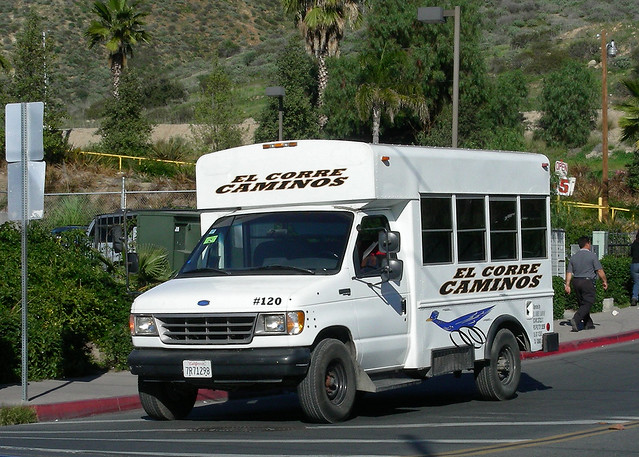
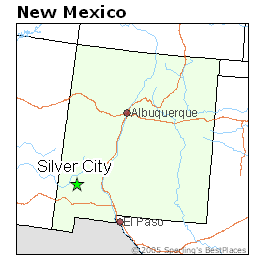
Beyond Deming, another hour is Las Cruces. It’s twice that distance to El Paso, which has the closest national airport. That is the level of isolation. To fly home for a funeral (as we’ve found out this week) is an undertaking that reaches the level of being basically impossible. Furthermore, there are no means of getting out there except driving yourself. I’ve live as far from a major airport before, but there have always been shuttles that will take you from the small towns to the big cities: not here. There have been attempts, but somehow, they’ve been thwarted. There is great public transportation in town for a town this size, but no way out if you need to go.

And that matters to us because we are so far physically from family. Jamie’s family is 1,800 miles away in Ohio. My family is about half that far in Nebraska. We can’t just hop a bus or a train or a plane to get out there. We just can’t go. It is enough to drive a person mad (by which I mean BOTH crazy and Angry).
So, I’m frustrated right now.

My wife is more frustrated for obvious reasons. She is also sad, angry and hurt. I wish there was something I could do to dull the pain, but there’s not. Way out here in the Southern Rockies, we’re too far out to do anything but cry.

Monday, April 29, 2013

The Afternoon Walk


Coming to terms with very little at all

Probably my favorite time of day is my afternoon walk with “the girls” as my wife and I call our two dogs, a black chihuahua named Bridget, 4 years old and a red English Cocker Spaniel named Katniss, almost a year old. I am not generally home from work very long before we go out.

It begins by me saying “Bridget, would you like to go for a walk?” Bridget's answers are nonverbal but nonetheless clear and always in the affirmative. I put Bridget on one end of two leashes I have tied together and go out to get Katniss.

Katniss lives outside because, for her, life is just too fun to be contained. So, indoor life would be like putting lightening in a box. She always greets me at the back gate with a toy. I often throw it for her a few times before she climbs up on the fence to accept her leash and training collar. I then pull her up from the fence and bury my face in her sun-warmed fur. She nuzzels back for a few seconds and then wiggles out for the walk.

For the first ten feet of the walk, the training collar is completely necessary. Katniss is so enthused to be out that she often jumps in circles and would run everywhere if allowed. Bridget looks with disdain at these antics and will sometimes even nip at Katniss to tell her that we need to WALK, not dance.

Then we walk from our street, down the main street to another side street to a dry creek bed. All along the way we are greeted by the barking of hundreds (well, at least lots) of other dogs all jealous of us and our happy romp. When we get to the creek bed, the real fun starts. We walk up the creek bed about 20 feet and then the leashes come off. The dogs run. I walk.

Technically, the creek is in town and the leashlessness is quite illegal, but we are not concerned. If we were to ask a surveyor, the creek is in people's backyards and “private property.” Still, if property is, as the economic theorists I respect believe, the application of labor to nature's bounty, this place is far from property. Here, nature allows no labor to have lasting effects. The flash floods that occur when it rains a few times a year would rip away any attempt at fencing or building. Here, the cottonwood, the Russian olive, the live oak, the juniper and (unfortunately) the Siberian elm grow unencumbered by any attempts by humans to tame them. Here one can find deer, javalina, raccoon, skunks and if the tales are true, mountain lions. This is a space right here in town which cannot be tamed, so it isn't. Instead people wander and hike on it like it is “public property” if such a thing can exist and we can all feel very free.

I walk along the path and watch the dogs dart among the trees and bushes. The place is alive with birds 365 days a year, and 366 on leap year. According to the philosophy by which Katniss lives, we should all do what we can. Birds can fly. So, they should. She is eager to follow her natural instinct and put every dove, quail, raven, starling and sparrow into the air with all the enthusiasm of a dog bread for 400 years for flushing. Bridget is also hunting. Often Bridget will find trash. Other times she will find a delicious lizard. Both dogs find the bones of deer who met their fate in the little ravine

As we walk up the creek we enter into a space that one would never think one was in town. The trees block any view of buildings and the wind in their branches washes out the noises of traffic. This time of year, the air is filled with a million pieces of cottonwood cotton almost reaching the ground before being whirled back up to the sky. I like to find a place to sit in this area. I watch my dogs, the birds and an occasional mule deer. Today I watched a gopher snake all curled up on a rock in the shade that had been a rock in the sun and was now probably perfect for maintaining his temperature. He watched me. I watched him. I don't like snakes and he didn't seem particularly fond of me either. Still, we put our archetypal differences aside and warily followed a policy of non-interference. I was somewhat concerned that he might attempt vengeance on the chihuahua for her reptilian pallet, but they never noticed each other.

I love it here. If I did not believe in God, in this place I would have to believe in many gods: gods of cottonwood and yucca and rocks and gopher snakes. But I only believe in one God and He's enough for all of this and more besides. Sometimes I sing. Sometimes I laugh. Sometimes I sit. Sometimes I wander over to see what the dogs are sniffing. Eventually, I walk on up the bank and around the corner.

Our walk makes a huge circle and when we come out, and the leashes come back on, we head over to the soccer field. If there are no games or practices, the leashes come off briefly again. If there are children playing, we walk around them. That brings us to the other end of the main road, which brings us back to our road which brings us home. And I put Katniss back in the back yard and let Bridget in the front, and face the chores of supper and dishes and the stresses of living a modern life. Sometimes, however, I look out the back door at Katniss playing with shadows of birds and briefly consider that I may just decide to step out back and live with her.  

Sunday, April 21, 2013

I'm not crazy (I have a Doctor's note saying so)

Coming to terms with sanity.


I don’t like to go to healthcare providers of any kind. My biggest concern, when I go in to the doctor for a simple checkup or to get a prescription for a known difficulty, is that they will tell me that I am sick. I worry that, feeling relatively healthy, or feeling a bit of sniffles, the doctor will say something like “you have two months to live” or “you have heart disease” or worst of all “no more chocolate for you.” I guess I’d prefer to be blissfully unaware of any medical difficulties I have. Of course, I always feel better leaving the doctor’s office having NOT heard these things. I feel like a weight has lifted. I guess some part of my mind always thinks that I am probably about to die, and I’d really rather not know.

I suppose it that a similar fear kept me out of a therapist’s office for years. I’d always had this sneaking suspicion that I was nuts. Certainly I didn’t feel nuts, but what greater evidence could one have? Honestly, I had other evidence as well. I’d had a home study when I’d hoped to adopt and the social worker had not approved us because I had experienced trauma that she felt I had not dealt with. My wife likes to read books about various psychological difficulties and has pointed out on a number of instances situations where I meet some of the criteria for some mental disorder or something. And, once in a while, I do something or think something that in retrospect I can see as crazy.

It was one of these instances that finally got me into a therapists’ office. I had an outburst of anger back in March that was so powerful that it scared me. I decided, I might really be crazy. I got so angry during a situation that I completely lost my cool. I decided I’d better go in. I fully expected that I would go in to the appointment and be sent away in a white coat to an institution where they would feed me powerful sedatives and hook me up to machines that would keep me in a state of constant electroshock.  I figured I’d be told that I am a danger to myself and others and that I should probably be locked up, permanently. I figured they’d at the very least tell me that I couldn’t have guns anymore, which made me sad, because I like guns. They make loud noises and gunpowder is one of my top five favorite smells.

Well, just like every single time I’ve ever been to a doctor, nothing terrible like that happened. In fact, there’s nothing wrong with me. I am not crazy at all. I do not have any type of mental disorder whatsoever, not even a mild one. The trauma the social worker believed I’d not dealt with is something that is there, and it does affect me, but it is not debilitating. I am sane: perfectly and entirely without mental defect.

And going to therapy for the last month has been really wonderful for me. I understand so much better what is going on in different aspects of my life. I recognize that my stress levels come from one specific source, the fact that I have never really learned to set boundaries. I have never really learned to say “no” when people ask me to do things. The reason is that I always do legitimately WANT to do everything people ask me to. Unfortunately, I can’t. I have limits. So, I am learning. I am learning that except in extreme circumstances, no one actually has the right to make any demands on me. People can make requests, and I can look at my priorities and I can say “no.”

This is really is hard because people get upset when others tell them “no.” The first response most people feel when told “no” is anger. I need to learn that just because someone is angry does not mean I should give in to them. When I’ve reached a point where I’ve done all I feel I can do, I need to say “no.” At this point this is still really hard for me because I hate having people mad at me. So, that is the next step. Learning to live with other people’s disappointment, and even my own, that I can’t do everything that’s asked of me. 

Thursday, April 18, 2013

A reasoned rant

Coming to terms with human rights.

This is going to get political.


Political discussions are hard which is why we hardly ever have any. There is either screaming or yelling and sloganeering or ignorant platitude that ignores the real issues. Part of the reason that they are hard is that politics stem from ideology, which the rhetorician William R. Brown described in the late 70’s as “that category of experience on which one is willing to bet the meaning of one’s life.” To lay one’s life’s meaning on the table like that and not get defensive when it is challenged is hard. To take as serious the points of view that run counter to the meaning of one’s life is hard. Instead, we get angry or we ignore others and write each other off as wackos or get in each others’ faces and “confront” each other. None of that is really productive, but it feels like our only choice.

Maybe there are other options. Maybe we can sit and explain the basic philosophy that undergirds our political beliefs and while we still might not agree with each other, maybe there is some chance that we can come to some kind of recognition that the other side is NOT a wacko. Maybe we’ll continue to see the other side as wrong, but not evil. That, to me, would be a powerful move in the correct direction.

So, I’ll begin with me. I’ll explain the basic philosophical discussions that undergird my opinions regarding the role and scope of government. Then maybe you can do the same. Maybe we can have longer, blog-length discussions about these issues instead of facebook/twitter length discussions. Oh, I am a realist. Probably we will all back into our corners, lick our wounds and think about how evil the other guy is, but at least we tried.

Rights and their sources:

First, I believe that rights exist independent of any type of state or government. I believe that they are given by God. States or governments can recognize or fail to recognize these rights, but the rights are still a person’s rights regardless of the decisions of those in power. Others may attempt to coerce one into not exercising one’s rights or punish one for doing so, but they are still, as the Declarationof Independence says, “inalienable rights.”

I think that there are a lot of rights that God has given us. Still, Locke’s trio of life, liberty and property are a good place to start because of their mutual balancing. Life is perhaps the easiest to understand. No one can take another person’s life. Liberty is the right not to be coerced. No one has the right to coerce another person into any action whatsoever. Finally property, which is the ownership of what one earns or creates when applying labor to nature’s abundance and God’s grace. No one has the right to take another person’s property or tell him or her how to dispose of it.

The right to responsive violence:

But what if someone does? Sheltering these three rights and a host of others is an assumed right that is rarely discussed: a right to responsive violence. Should a person attempt to take your life, coerce you into anything or attempt to confiscate or destroy your property, you have a right to engage in violence equal to the necessity required to halt such infringement or die trying. The right to responsive violence does not mean that you can infringe on others’ rights to life, liberty or property. Your right to responsive violence does not mean that you can take lives of those not currently attempting to take yours. It does not mean that you can legitimately use violence to coerce others. It does not mean that you can use violence in order to force others to relinquish their property. The right to responsive violence does not allow for coercive or preemptive violence. It means that one has the right to respond violently to violent intrusion.

The Nation-State is Suspect.

In order to protect these inherent rights from violence, people have traditionally banded together. One’s own inherent right to responsive violence can be shared among a group so that if a neighbor’s life, liberty or property is being violently assaulted, one can, with the neighbor’s permission, work together to violently fend off such attacks. Furthermore, we have found as a species that any number of our labors is more fruitful and enjoyable when shared. However, there are limits on the extent to which we can share. Coercing a person into sharing his or her labor is chattel slavery. This type of slavery violates notions of both liberty and property and has a huge probability of ending in a violation of one’s right to life as well. Coercing a person into sharing the fruits of his or her labor is theft and is a violation of the right to property as well.

Because no one has the right to violate life, liberty or property, the nation-state is a problematic concept. While people are able to work together to pool resources and incorporate in order to better their lives, protect their liberty and increase their property, they must be free to leave such agreements whenever it is no longer satisfactory or it is coercion. Coercion is a violation of liberty and is therefore wrong. It is such a problematic concept that God declared that the formation of a nation-state a “rejection” of Him (I Sam 8: 7). Smaller local and temporary governments were fine and necessary. Voluntary grouping of individuals is a good thing. Coercion, however, is wrong, always.

Nation-states have a tendency to use coercion not only on those outside their borders but on their own citizens. Citizens regularly have their labor confiscated in the form of taxes and while this is sometimes beneficial, it is hardly ever consensual. Often behaviors are regulated in the form of laws which if violated result in the loss of liberty, property or life. While these behaviors, if violating others’ rights, should be met with responsive violence, this is not always the case. Often laws are created with the idea of preemptively attacking the “criminal” before such violations are carried out. Such preemptive and coercive violence is always wrong. In fact, it is part of an individual’s right to violence to return violence in such instances.

There is No Legitimate Monopoly on Violence.

Many thinkers, wishing to justify the nation-state, have insisted that in the creation of the nation-state there is a simultaneous construction of an entity which has a legitimate monopoly on violence. Of course, I am thinking of Weber here, but even thinkers as recently as Presidents George H. W. Bush and Barrack H. Obama have espoused this notion that nation-states have a legitimate monopoly on violence. There are two major means by which this is understood and both are wrong.

Certainly, a person can voluntarily pool resources with others and make voluntary agreements to limit and direct his or her right to responsive violence. It is reasonable for someone who is not particularly skilled at martial affairs to engage in activities at which he or she is good and from the proceeds of those activities engage someone more skilled in combat to engage in responsive violence for him or her. In a free community, some might be employed in various roles and the free trade of their skills and some of those skills might be soldiers to whom the members of the community voluntarily contribute to their welfare in return for not needing to focus on protective violence themselves. However this does not constitute a true monopoly on violence because any member of a free community, being free, could extricate him or herself from this arrangement and take responsibility for responsive violence on his or her own. Voluntary incorporation does not imply monopoly.

Others seem to imply that the creation of a nation-state suddenly creates an entity that can legitimately engage in coercive and preemptive violence. Of course, that’s what any bully wants you to believe, that he or she has the right to be preemptively violent and coercive. This is a dangerous mindset into which many people have bought and which has allowed many people not to realize the rights that they have. These rights, however, are truly inalienable. Neither the nation-state nor anyone else has the right to engage in coercive or preemptive violence against anyone. No matter how beneficent the leadership of the state feels that the coercion is, they have no legitimate right to engage in it. Only responsive violence is ever legitimate and that is held solely by the individuals whose personal sovereignty is violated. The state cannot legitimately coerce a person.

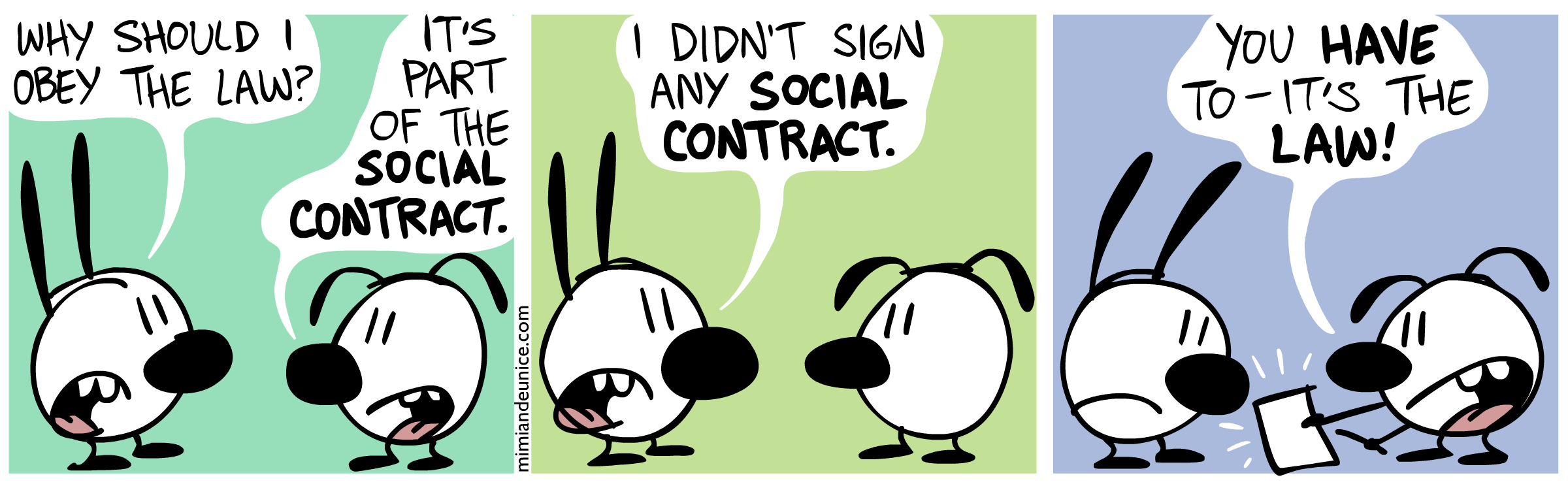
There is No Social Contract.

Some, such as Rouseau, have argued for the legitimacy of the state as an instrument of violence by referring to a social contract. Since contracts are a means by which people can willingly incorporate, share their property and agree to means of enforcement, participation is not coercive or preemptive because it is agreed upon by all signers. If I agree that I will give you sixteen apples for sixteen oranges, get the oranges and refuse to give you the apples, any violence in which you engage with me to get your sixteen apples is not coercive violence but responsive violence because by lying, I engaged in violence to fraudulently acquire your property. It is reasonable and right that violators of contracts be violently held to the agreements by which they acquired goods and services.

However, the existence of this social contract is seriously in question and even if it does exist its validity is nullified. I never signed a “social contract” and neither have you. The reason we’ve never signed one is that one probably does not really exist. According to most people who accept the concept of the social contract, we “signed” it by accepting the goods and services of the nation-state and are therefore unable to remove ourselves from it until our obligation is paid, which it never will be, and therefore we are chattel-slaves to the state. The nation-state “signed” it by providing goods and services, such as military protection. The problem with this is that we were not aware at the time of our birth that by accepting being born into a world with roads and bridges we were going to be forced into things like military conscription. If we had been able to, we might have made another choice.

Contracts are a means by which free parties can negotiate shared terms whereby they will agree to handle their business. The terms of the social contract, however, are by no means a negotiation. Should a person wish to interact with a nation-state on terms other than those chosen by the nation-state, one is unable. Now, a take-it-or-leave-it contract does not necessarily invalidate the contract, but there still does have to be the choice to leave it. Any contract is invalid if signature on that contract is coerced. Choosing a social contract is coerced, and claiming that the coercion of the nation state is valid because of the social-contract is saying that coercion is acceptable because of coercion.

So, whether on the grounds of a legitimate monopoly on violence or on the grounds of a social contract, the nation state has questionable validity. Certainly, it does not have the right to coercive violence. No matter how much it may be in your own best interest, neither the nation-state nor anyone else has the right to coerce you into anything.

Still, the nation-state exists.

The nation-state continues to exist and continues to coerce and I don’t take up arms against it nor do I really encourage anyone else to do so. There may be a lot of reasons for this. Maybe because I am of the dominant race, gender, education level and class, a coercive nation-state is to my obvious benefit. Most of the stuff that they’d coerce me into doing are things that I’d probably do if they weren’t there anyway. They make me pay taxes, but I contribute more to charity in a given year than to taxes. They have speed limits, which I largely ignore except when I think they’re looking. Furthermore, there’s probably some serious cowardice going on too. If I rose up against the federal Government of the United States of America, I’d lose. So, I don’t. I don’t recommend anyone else do it either. “We’ll put a boot in your ass, it’s the American way” as the song says and Ruby Ridge and Waco prove.

Furthermore, America is far from the worst among nation-states. I can publish this blog without fear of reprisal. You can’t do that everywhere. There are also a number of means whereby I can contribute to the conversation about coercion, property seizure and responsive violence. I can make arguments that the government must not take away my right to responsive violence, that I do not wholly abdicate that right to police or to the military because don’t trust them. I can make arguments against the preemptive and coercive use of violence. I can stand up and say that the federal government needs to relinquish control to the states, the states need to relinquish control to the counties and the counties need to allow decisions to be made at small local levels.

So, yes, I am against federal gun control.

I have to be against federal gun control. The state uses coercive means to preemptively stop crime and that is wrong. If one wants to voluntarily create a community with strict gun standards that is fine, but no one should be coerced into becoming a part of that community. I am also against federal drug prohibitions. I am against the use of eminent domain. I am against the federal recognition of marriage although I am strongly for marriage and am happy to be married. I don’t believe that any kind of preemptive or coercive law is right, no matter how much it may be “to protect” people. 

Wednesday, March 13, 2013

Hell Bubble

Coming to terms with my fears.

Hell Bubble

Somewhere outside this sphere there are noises
of angry screaming, cussing, hurting sounds
which are coiled serpents dripping poisons
which are airless spaces where I will drown.
Somewhere outside this circle  there is pain
where tortured people find someone to hurt
contagious hatred drives each one insane
each person grinds the other into dirt.
I feel that I must preserve this bubble;
smooth the fragile shell from penetration
for if I allow the smallest trouble,
then comes immolation, conflagration
Rising, Dragon, Phoenix from my downfall
king of demons, I will destroy them all.

Benjamin J. Cline
03-13-13


Coppo Di Marcovaldo (1225-1275)
The Hell
Mosaic

Wednesday, March 6, 2013

Home?


Coming to terms with my roots.
Part of how I see myself is as a cosmopolitan American. By this I mean I’ve lived in America my whole life, but not any single part of America. I was born in western Nebraska, but my parents moved to Alaska soon after. We lived in a couple towns in Alaska before settling down for quite a few years in eastern Wyoming. After that we moved to western Nebraska again, then to central Nebraska. When my parents moved on, I stayed in central Nebraska before I moved to Ohio. From Ohio I moved to Virginia, then to Kansas. From Kansas I moved to Missouri. Then I was back in western Nebraska, but in a town I’d never lived in before.  After that, I moved to where I live in southern New Mexico.

I see my roots as American. I love my country. Still, the roots are to ideals of frontier ingenuity, independent Christian faith, loyalty to family, hard work, liberty, which I see as loving others but letting them make their own mistakes, and freedom, which I see as the right of self determination. You know, America. Quite possibly all this applies to other countries too, but I think of them as America. Oh, sure I like the amber waves of grain and purple mountains majesty. I’ve seen the east coast, the west coast, the Gulf Coast and the Gulf of Alaska coast. Wherever I live, I see it as temporary. I see it as a place that I love and enjoy but from which I will move on when the time comes.

In general, when I move, I just move. I leave. I don’t miss a place. Since facebook, I’ve been able to have some sort of relationship with people I once lived near, but for the most part, I don’t really talk to people very much once I’ve moved away from them. It’s over. I don’t know if this is a coping skill I’ve learned because I moved so much or if it is part of who I am and has allowed me to move around so comfortably. I’ve liked them all, but my roots are not more ideological than geographic.

At least that’s the way I see myself.  My parents, despite moving around quite a bit, have always seen themselves as being western Nebraskans. More than that, they see themselves as being from the North Platte Valley in the Scottsbluff region of the panhandle. My parents lived there growing up, their parents lived there their whole lives and I lived there for the end of junior high and the beginning of high school. We lived in a house built by my great grandfather and that we rented from my grandmother. While we were there, my parents saw themselves as “home.” I’ve always seen it as being another place where I lived one time.

This past summer, my parents moved back there. They moved back to the very same family house, and right now, I am there visiting them.  It is weird. This house is owned by family, so I’ve been back a few times. It’s always been weird, but actually staying there is weirder. The house is different than it was when we lived here. First of all it is surrounded by a thick wind break: a necessity for this region where the wind can regularly gust into the 40mph range on a still day. On windy days, like yesterday, it just stays there. It was really nice to have it yesterday. My dad and I planted it in 1988 and I had to haul 5 gallon buckets of water out to those trees every day. I hated it.

Those trees, the trees I helped plant and water, are the strongest markers of the weirdness of this place. Generally, I do things, but I guess because I am always moving on I rarely see the consequences of my actions, rarely see the reaping of what I sow.

My Dad and I took his car into a mechanic. The mechanic had been one of the kids in the youth group when dad was a young minister. The mechanic came out and told me about how my dad had led him to Christ in the early 1970’s. He told me about how he had been able to grow in the faith himself, and how he witnesses to others through his business.  It was like the trees. I know my Dad has been ministering for a long time, but it is only the immediate consequences of his work that I see and that I know.

I am who I have become and I don’t think that I could ever really become a person with geographic roots. I suppose this place where my family is from is as close as I’ll ever have.  I am content with finding these. I am content with seeing these trees. I am content to come back and see these people. It’s enough.  An old man in a green pickup truck drove in while I was walking my dogs yesterday and said “you must be a cousin.” I guess I must be. I guess this must be “home.”